HVAC Services in Saint George, UT
Connect directly with experienced local HVAC technicians for air conditioning repair, high-efficiency heat pump installation, furnace maintenance, and emergency troubleshooting engineered for extreme Saint George desert heat.
Direct Field Dispatch
Connect directly with our local Saint George response desk. No automated menus or call center queues.
(435) 348-8603Engineered for Reliability in Utah's Desert Climate
When temperatures in Saint George climb past 105°F or drop to winter freezing lows, you need prompt, transparent, and disciplined mechanical support.
Rapid Response Dispatch
Air conditioning loss during Mojave Desert heat waves poses genuine health and safety hazards. Our field coordinators route technicians directly across Washington County with fully stocked service vehicles.
Clear Project Estimates
No hidden surprises or deceptive add-ons. Technicians conduct empirical diagnostic checks and present a clear, itemized written estimate for your review and approval before performing any repairs.
Clean-Tech Protection
Technicians wear sanitized protective shoe covers before crossing your doorway, place heavy protective drop cloths under tools, and leave your mechanical closets, attics, and living areas spotless.
Complete HVAC Solutions for Washington County
From emergency cooling diagnostics during triple-digit summers to high-efficiency heat pump replacements, our local technicians deliver disciplined workmanship.
 Cooling
Saint George, UT (37.0965° N, 113.5684° W)
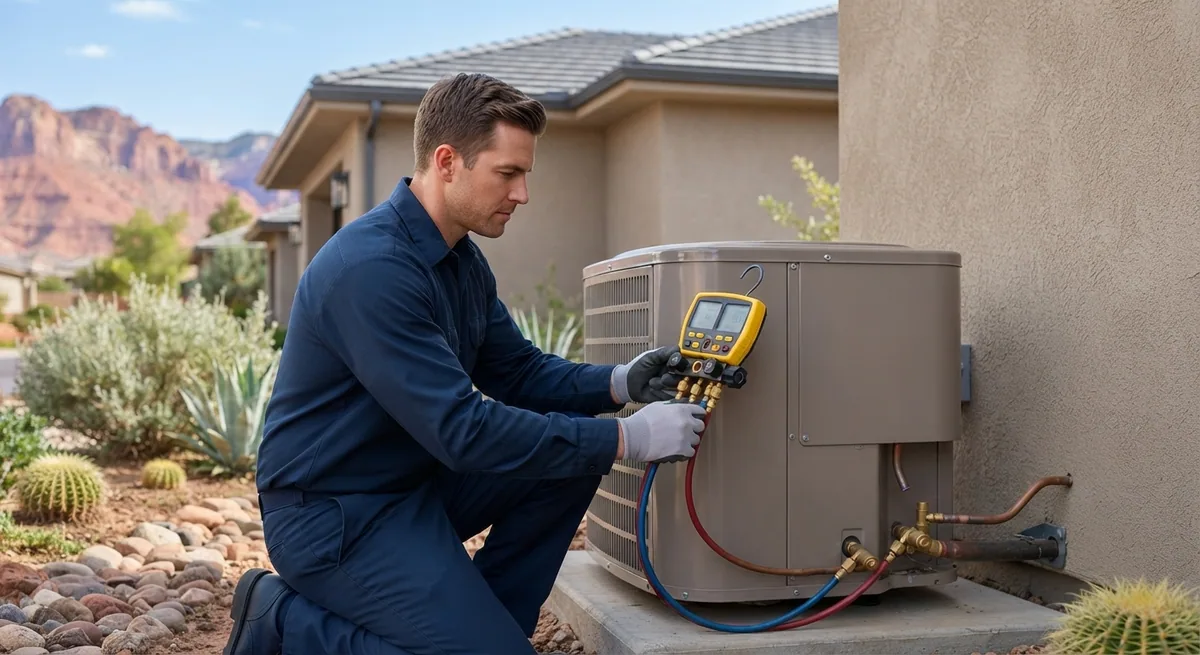
Air Conditioning Repair
Prompt on-site diagnosis and repair for failing compressors, frozen coils, fan motor breakdowns, and refrigerant leaks in extreme Saint George desert heat.
 Cooling
Saint George, UT (37.0965° N, 113.5684° W)
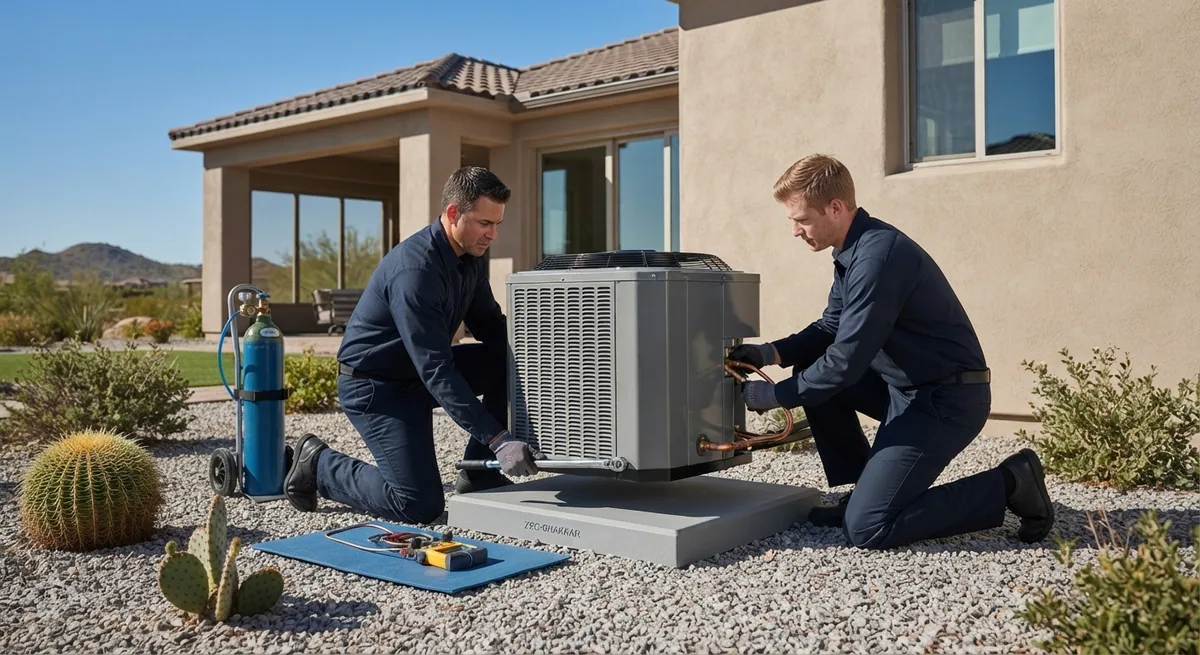
AC Installation
High-efficiency Southwest-compliant SEER2 cooling system installations engineered for extreme 115°F summer peak temperatures in Washington County.
 Cooling
Saint George, UT (37.0965° N, 113.5684° W)
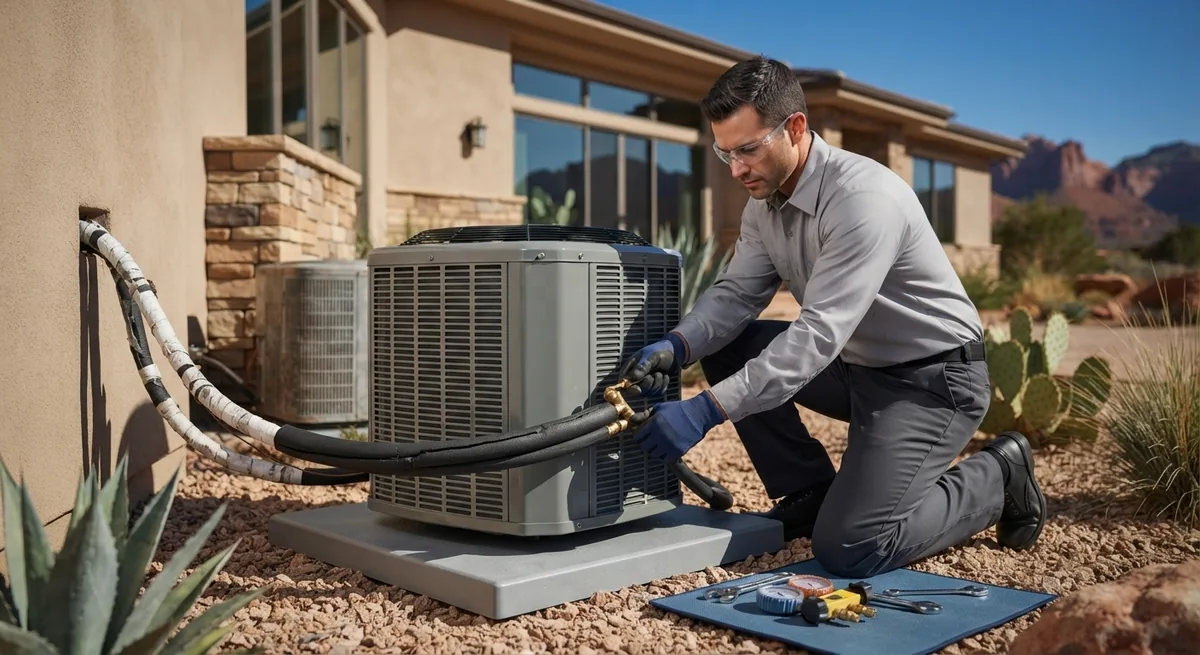
AC Replacement
Full system transitions from aging, phased-out R-22 equipment to modern high-efficiency multi-stage and inverter cooling platforms.
 Cooling
Saint George, UT (37.0965° N, 113.5684° W)
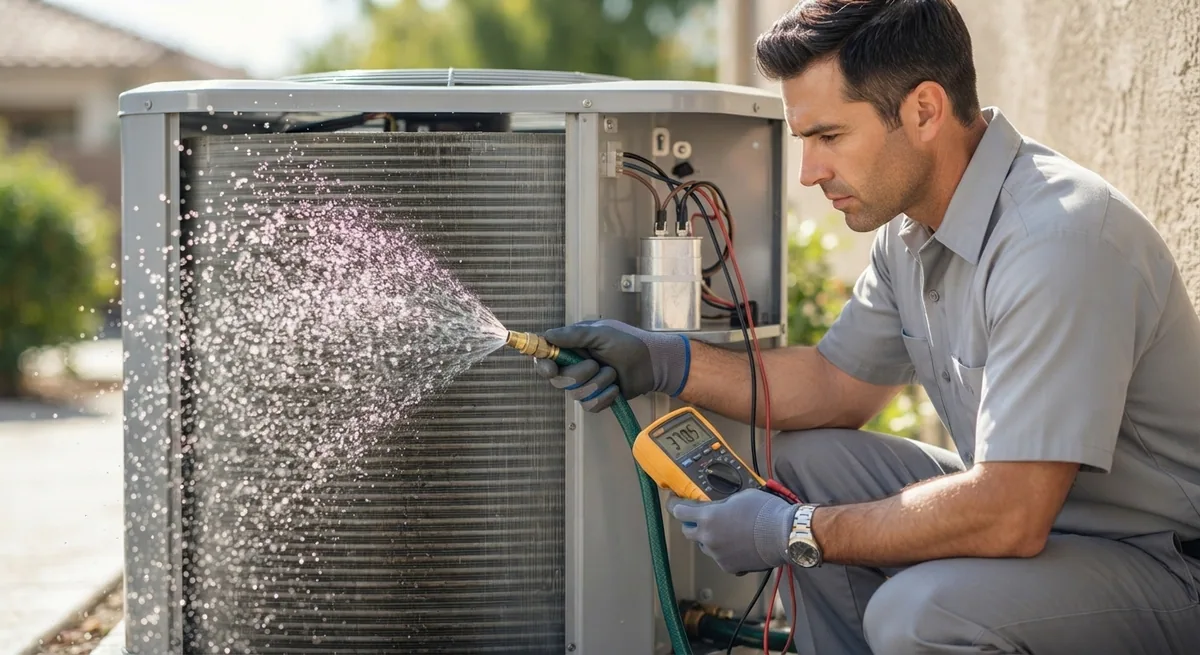
AC Maintenance & Tune-Up
Comprehensive pre-summer seasonal inspection, coil chemical wash, electrical capacitor check, and airflow verification for desert durability.
 Heating
Saint George, UT (37.0965° N, 113.5684° W)
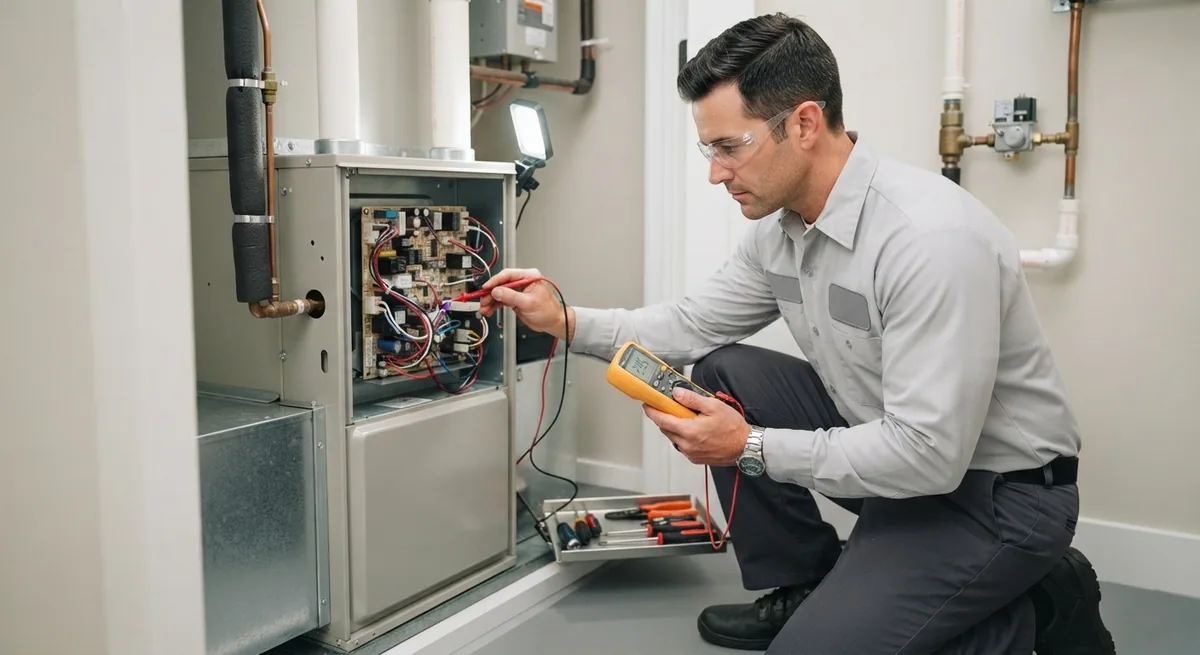
Heating Repair
Emergency heating troubleshooting for desert winter nights, restoring warmth across central heat pumps, split systems, and packaged units.
 Heating
Saint George, UT (37.0965° N, 113.5684° W)
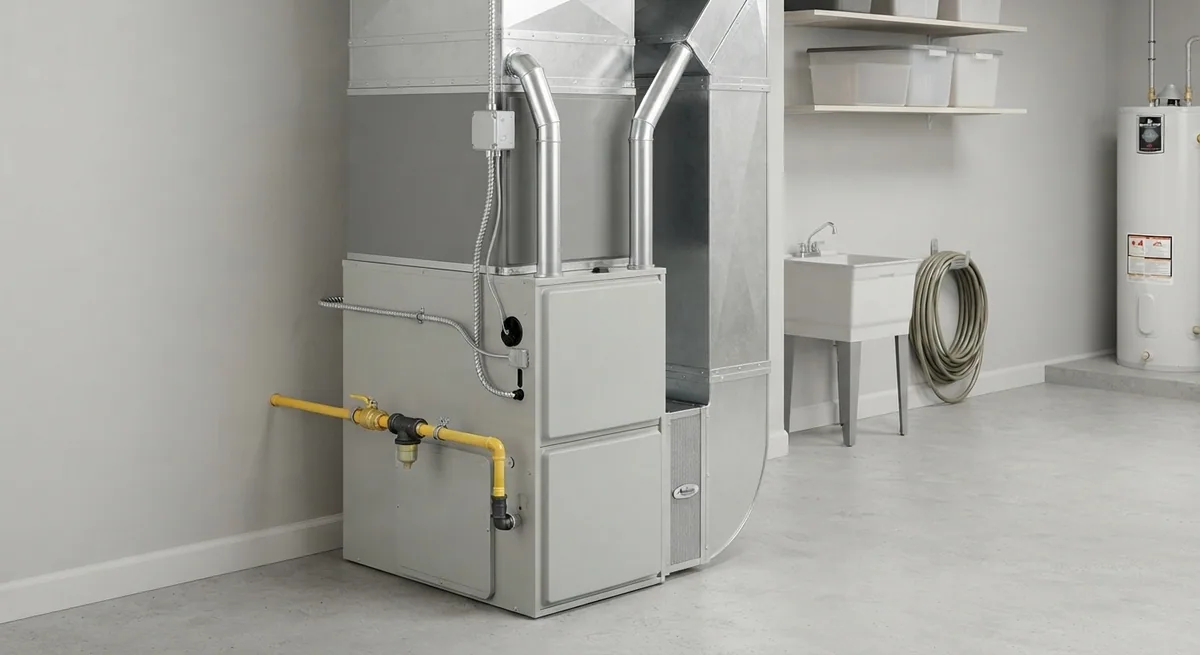
Heating Installation
Precision load-calculated heating system installations delivering consistent, energy-conscious heating throughout cool Utah desert seasons.
 Heating
Saint George, UT (37.0965° N, 113.5684° W)
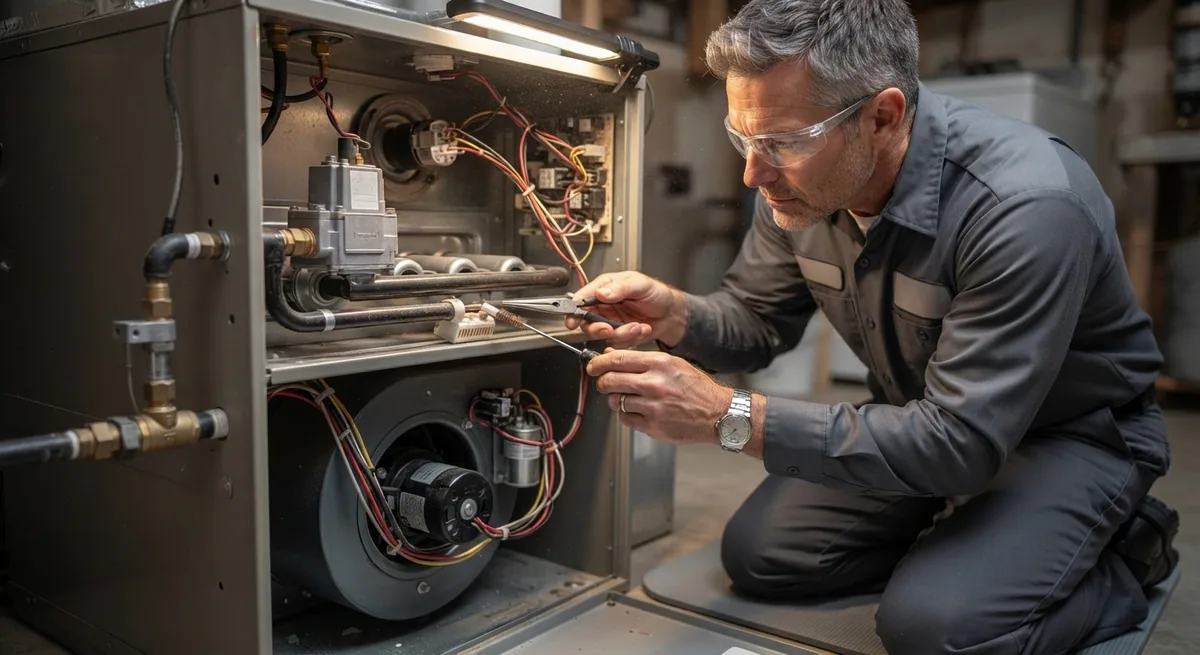
Furnace Repair
Fast diagnosis of faulty hot surface ignitors, cracked heat exchangers, dirty flame sensors, and failed inducer blowers.
 Heating
Saint George, UT (37.0965° N, 113.5684° W)
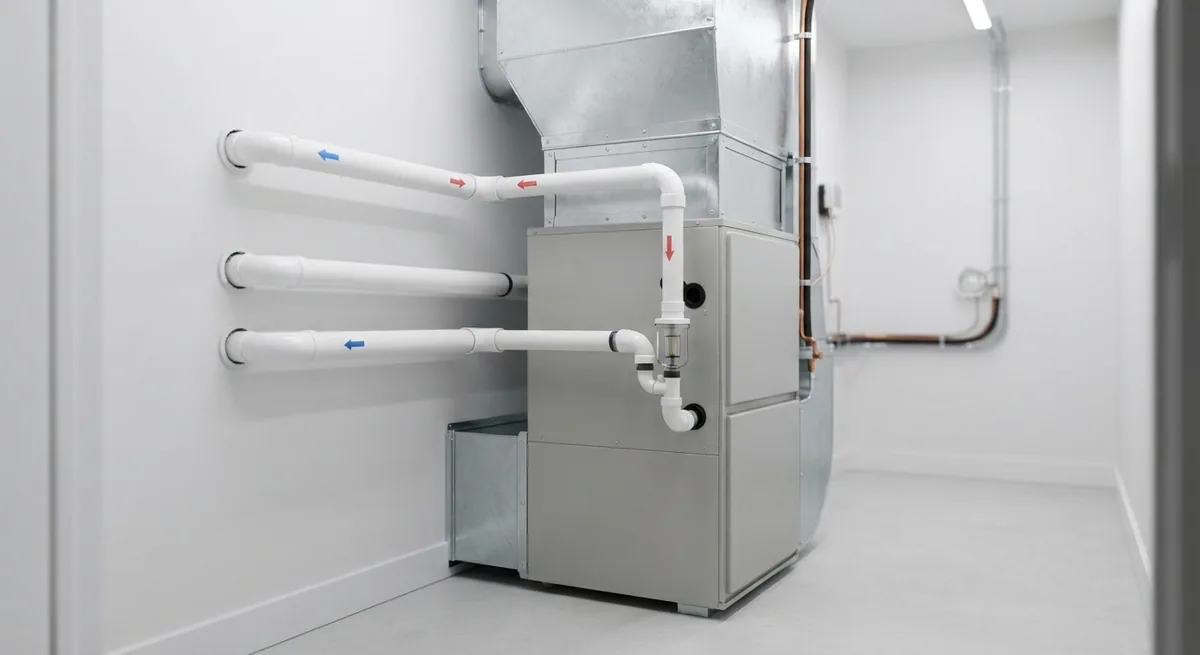
Furnace Installation
High-AFUE gas and electric furnace installations meeting all Utah municipal mechanical codes and ventilation standards.
 Heating
Saint George, UT (37.0965° N, 113.5684° W)
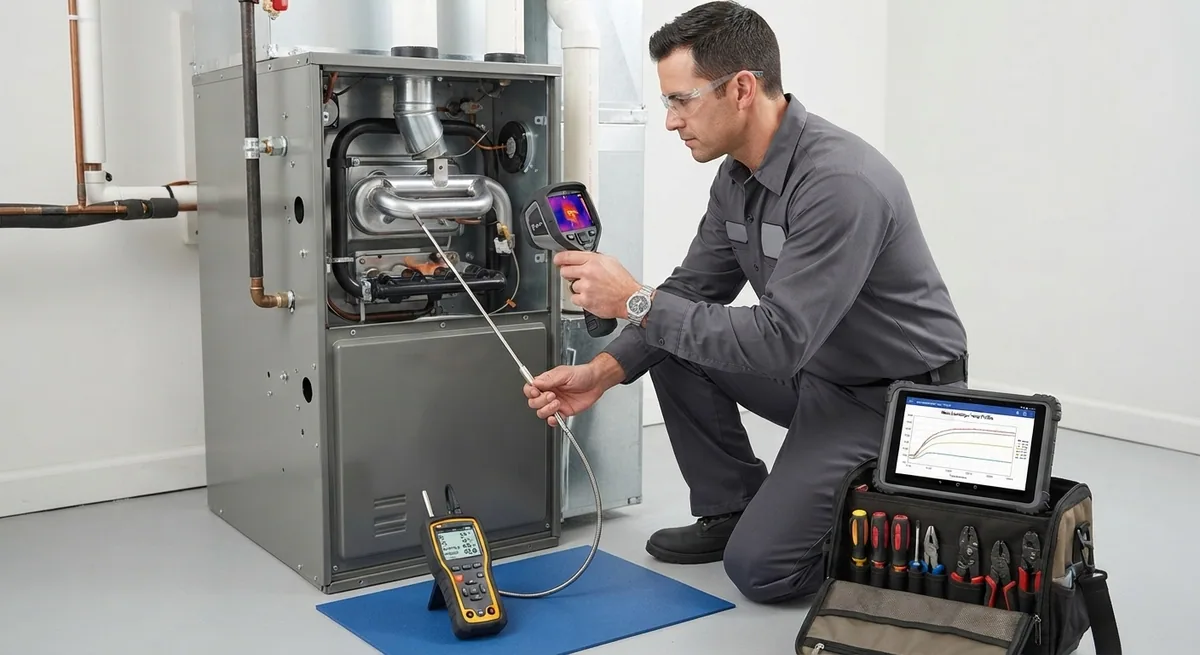
Heating Maintenance
Annual safety checks, burner cleaning, heat exchanger camera inspections, and carbon monoxide testing before freezing temperatures arrive.
 Heat Pumps
Saint George, UT (37.0965° N, 113.5684° W)
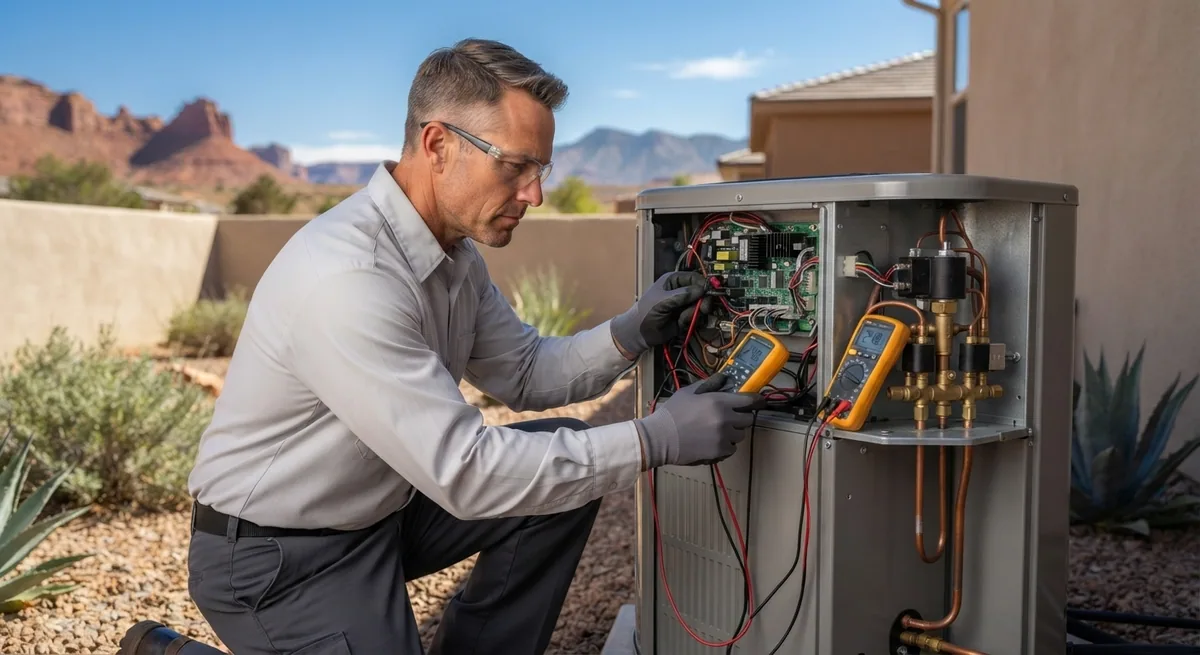
Heat Pump Repair
Resolving stuck reversing valves, defrost cycle failures, auxiliary heat strip errors, and inverter compressor faults.
 Heat Pumps
Saint George, UT (37.0965° N, 113.5684° W)
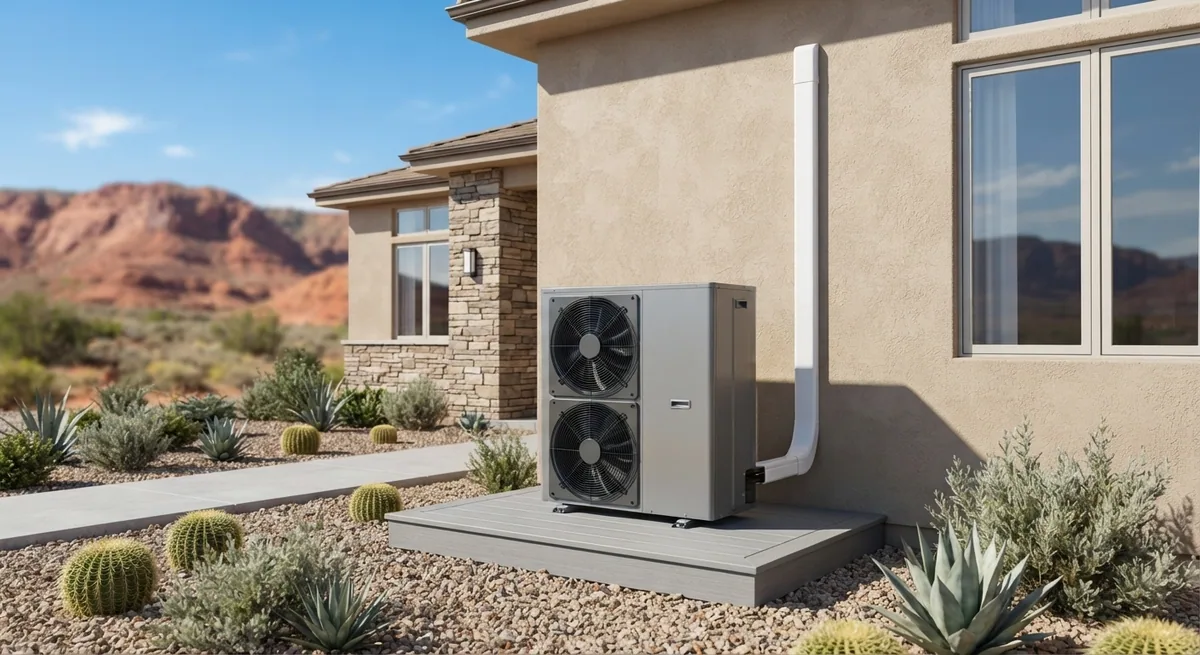
Heat Pump Installation
Ultra-efficient dual-fuel and inverter heat pump systems ideal for Saint George's year-round heating and cooling climate.
 Heat Pumps
Saint George, UT (37.0965° N, 113.5684° W)
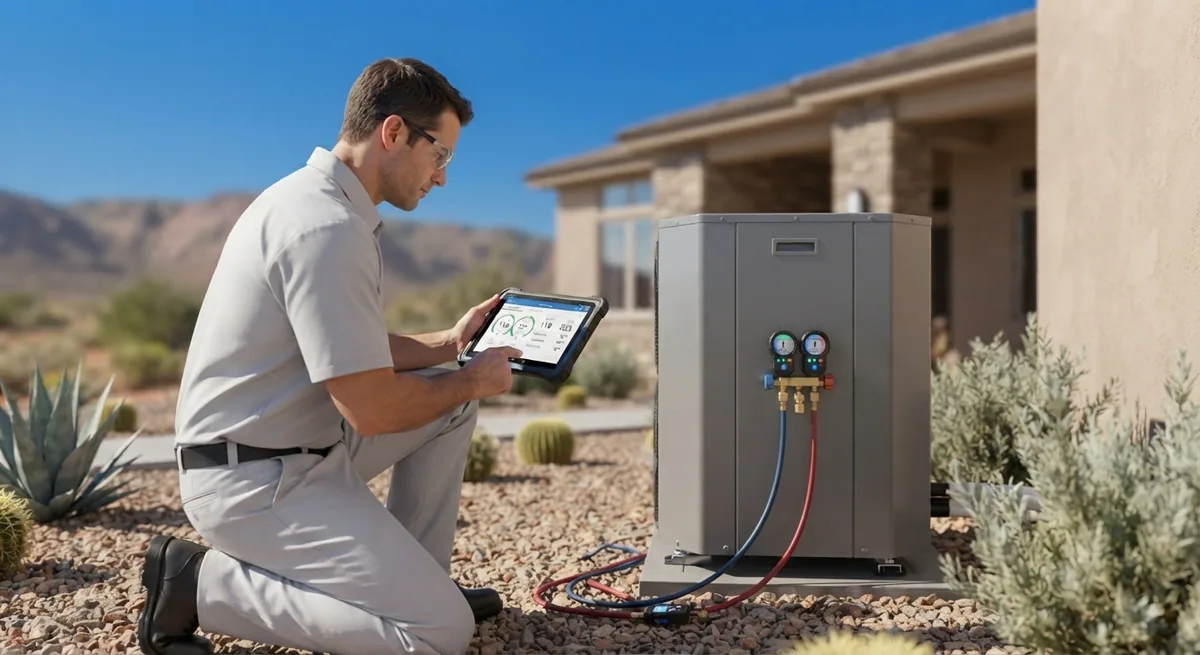
Heat Pump Maintenance
Bi-annual comprehensive tune-ups ensuring peak thermodynamic performance in both heating and cooling operating modes.
 Air Quality
Saint George, UT (37.0965° N, 113.5684° W)
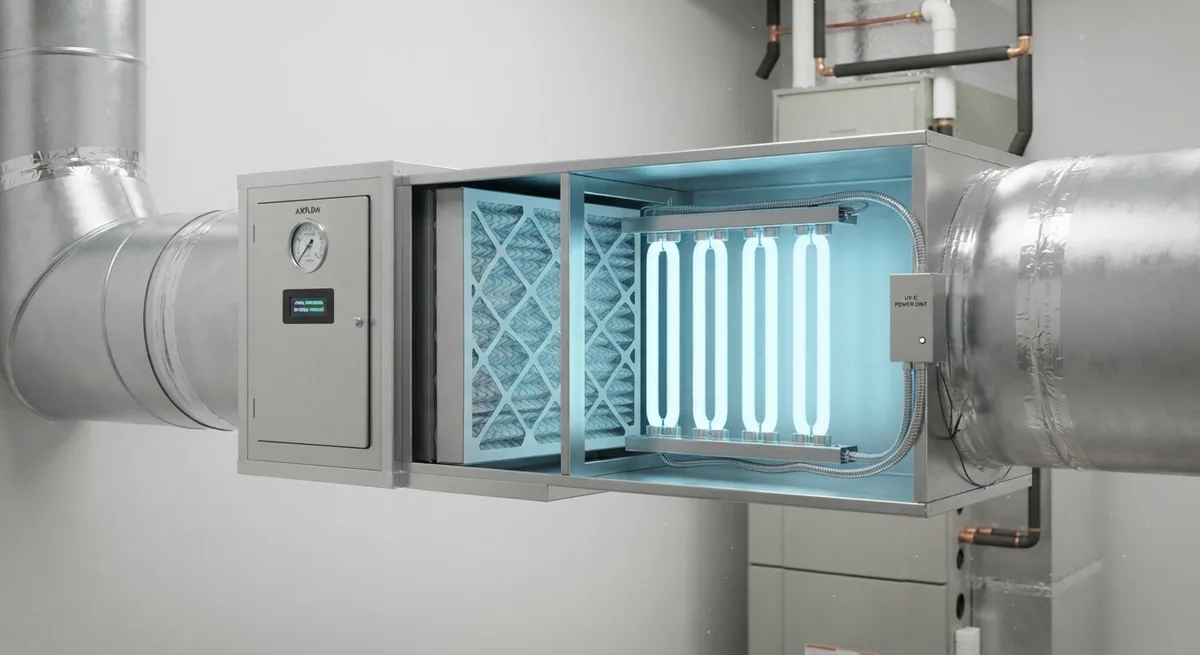
Indoor Air Quality
High-efficiency MERV filtration, UV germicidal purifiers, and desert humidity balancing solutions to remove red sand dust and allergens.
 Air Quality
Saint George, UT (37.0965° N, 113.5684° W)
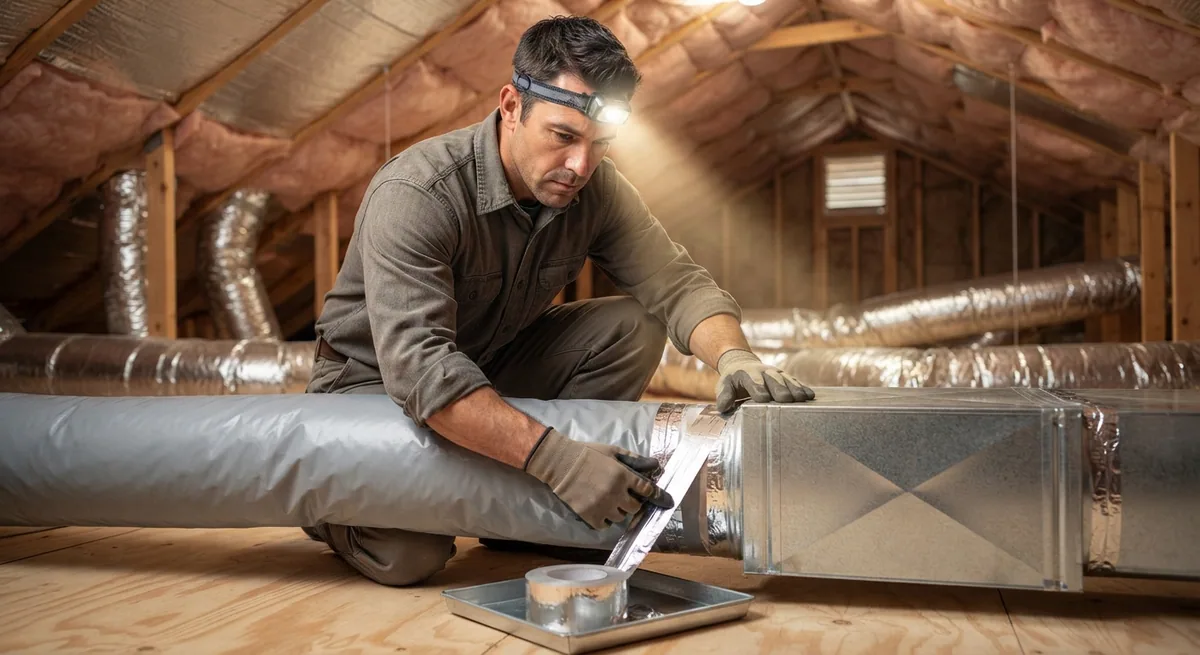
Ductwork Repair & Sealing
Attic duct leakage testing, mastic sealing, R-8 insulation wrapping, and custom duct replacement to eliminate hot spots and energy waste.
 Specialized
Saint George, UT (37.0965° N, 113.5684° W)
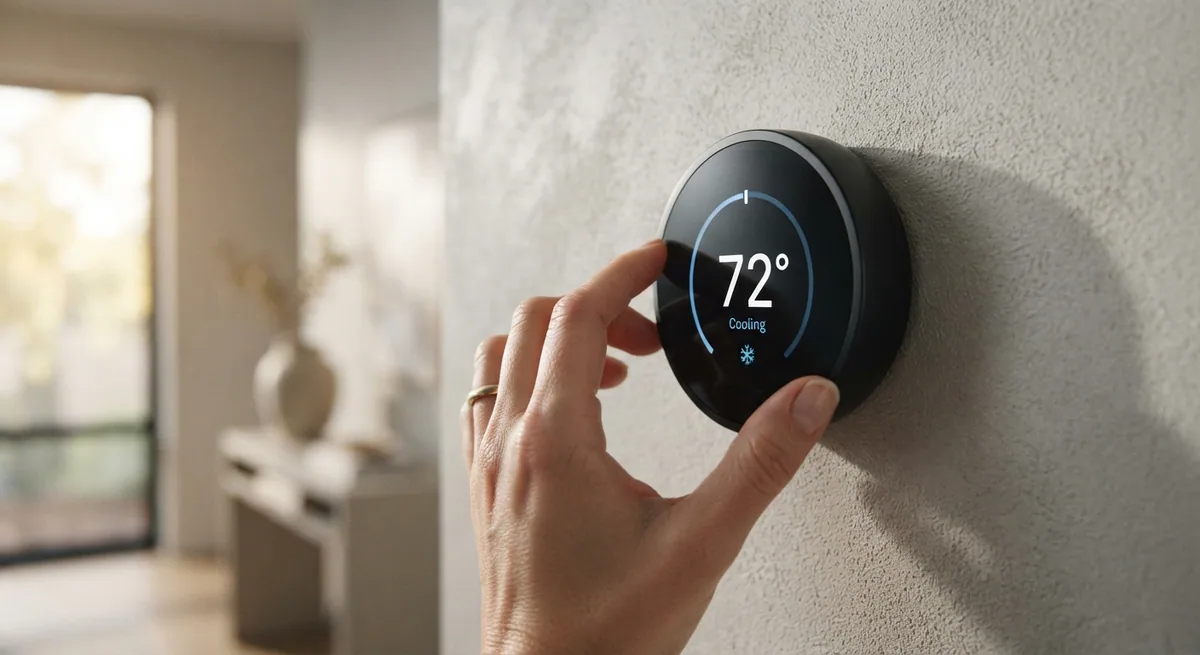
Thermostat Services
Smart, programmable, and WiFi thermostat installations and calibration calibrated to handle desert temperature swings.
 Specialized
Saint George, UT (37.0965° N, 113.5684° W)
HVAC Maintenance Plans
Proactive bi-annual system protection protecting residential equipment against premature breakdown and high Dixie Power utility bills.
 Specialized
Saint George, UT (37.0965° N, 113.5684° W)
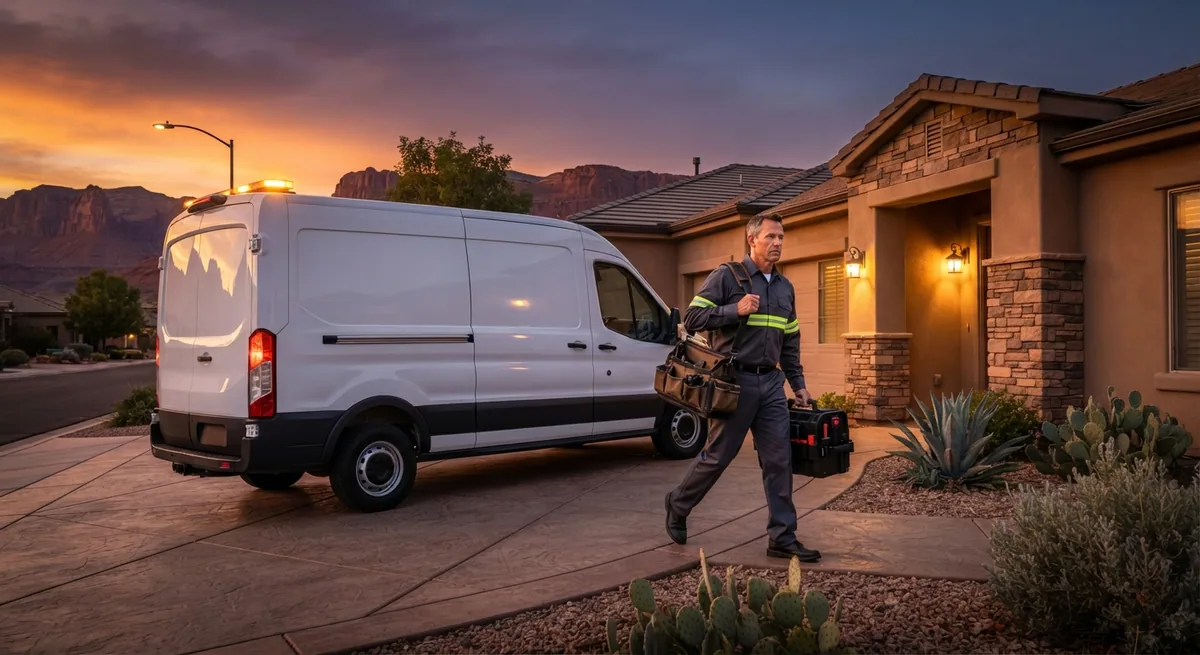
Emergency HVAC Troubleshooting
Priority dispatch during dangerous heat waves or sudden winter cold snaps when complete climate control failure puts properties at risk.
 Specialized
Saint George, UT (37.0965° N, 113.5684° W)
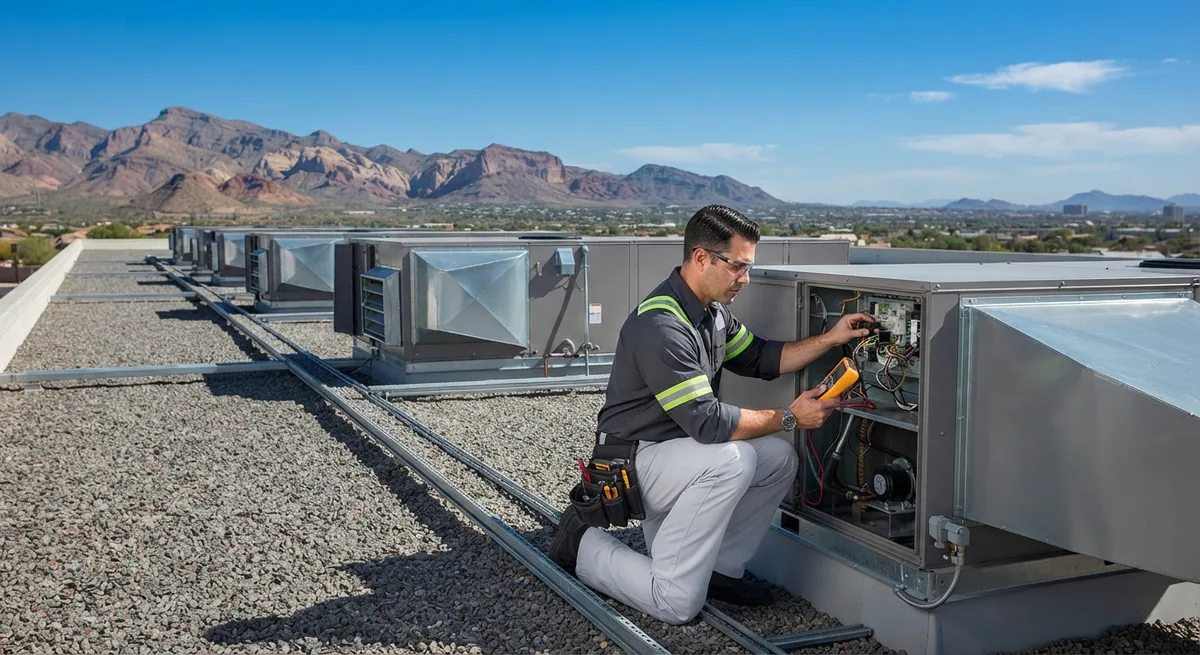
Commercial HVAC Services
Rooftop packaged unit (RTU) maintenance, commercial cooling diagnosis, economizer repair, and scheduled property service.
Our 4-Step HVAC Service Methodology
Engineered to guarantee rapid local response, empirical diagnostic accuracy, upfront pricing clarity, and code compliance.
Discovery and Dispatch
Direct telephone intake with our Saint George dispatch desk to record symptoms, assess thermal urgency, and route the nearest field unit directly to your property.
Empirical Diagnostic
Comprehensive physical, thermal, and electrical diagnostic testing of your cooling or heating system to pinpoint the root mechanical failure without guesswork.
Clear Project Estimate
We clearly explain our diagnostic findings and provide a transparent, itemized written estimate detailing scope and materials for your approval before starting work.
Precision Execution
Flawless repair or installation utilizing OEM parts, adherence to Utah mechanical codes, full thermodynamic testing, and thorough clean-up upon completion.
Comprehensive Climate-Engineered HVAC Solutions in Saint George, Utah
Operating an HVAC system in Saint George, Utah, demands an engineering approach that accounts for one of the most punishing desert environments in North America. Situated within the northeastern edge of the Mojave Desert at an elevation of approximately 2,700 feet, Saint George experiences sustained summer temperatures frequently exceeding 105 degrees Fahrenheit, with peak heat waves surging to 115 degrees Fahrenheit. In this extreme thermal environment, residential and commercial cooling systems do not merely operate for comfort; they function as critical life-safety infrastructure. When an air conditioner malfunctions during a Southern Utah heat wave, indoor temperatures can climb into dangerous territory within hours, placing elderly residents, young children, and domestic pets at immediate risk.
Conversely, winter conditions in Washington County present a stark thermodynamic contrast. Nighttime desert temperatures routinely drop into the 20s and low 30s Fahrenheit, requiring responsive, highly reliable heating systems. Whether your property relies on a modern inverter-driven heat pump, a dual-fuel hybrid system, or a high-efficiency natural gas furnace, your mechanical equipment must transition seamlessly between extreme heat displacement and rapid winter warmth.
Our local dispatch network connects property owners across Saint George, Washington, Santa Clara, Ivins, and Hurricane with vetted, professional HVAC technicians. Every technician dispatched through our network possesses deep familiarity with regional building codes, Utah Department of Environmental Quality standards, and the specific load challenges presented by Dixie red sand dust, intense solar radiation, and extended duty cycles. We emphasize prompt local dispatch, empirical on-site diagnostic testing, clear written project estimates, and clean-tech property protection protocols on every service call.
To explore our full range of residential and light commercial capabilities, visit our comprehensive commercial HVAC services directory, where you can review specialized equipment protocols, diagnostic workflows, and seasonal tune-up schedules.
The Mojave Desert Climate Challenge: Why Local HVAC Systems Fail
Air conditioning systems in Saint George endure operational run-times that far exceed national averages. Understanding why equipment breaks down in Southern Utah requires an examination of the mechanical, thermal, and environmental stresses unique to Washington County.
1. Extreme Condenser Head Pressures and Thermal Saturation
When ambient outdoor temperatures climb past 105 degrees Fahrenheit, the temperature differential between the outdoor air and the hot refrigerant gas circulating through the outdoor condenser coil narrows drastically. The air conditioner's compressor must work significantly harder to pump high-pressure, superheated vapor refrigerant through the condenser. This creates elevated head pressures that push hermetic compressors, dual run capacitors, and condenser fan motors to their absolute thermal limits.
Standard residential capacitors rated for moderate climates frequently suffer dielectric breakdown under sustained 140-degree heat inside outdoor electrical compartments. When a run capacitor weakens or ruptures, the compressor and fan motor draw excessive locked-rotor amperage, tripping circuit breakers or causing permanent motor winding burnout. If your system hums loudly or fails to initiate cooling, you should immediately review our emergency troubleshooting protocols on our dedicated air conditioning repair service page before continuing to cycle electrical power.
2. Dixie Red Sand Dust and Coil Fouling
Saint George is renowned for its iconic red rock landscapes and fine sandstone soils. During seasonal wind events and desert dust storms, microscopic red sand particles become airborne and are drawn directly into outdoor condenser coils and indoor air filtration systems. When red sand dust settles onto condenser fins, it forms an insulating blanket that blocks airflow and severely impedes thermodynamic heat transfer.
Internally, fine dust that bypasses low-efficiency fiberglass filters accumulates on the wet aluminum fins of the indoor evaporator coil. This creates a dense sludge that restricts air distribution, starves the compressor of return vapor, and triggers premature coil freeze-ups. Regular preventative chemical washes and high-MERV filtration upgrades, detailed in our indoor air quality solutions, are essential to prevent irreversible equipment degradation.
3. Superheated Attic Thermal Loads and Ductwork Losses
In the vast majority of Saint George residential construction—from established homes in Bloomington to modern master-planned residences in Little Valley—ductwork is routed through unconditioned attic spaces. During peak summer afternoons, radiant heat from tile and asphalt shingle roofs drives attic temperatures upwards of 135 to 150 degrees Fahrenheit.
If attic ductwork exhibits air leakage, disconnected mastic seals, or substandard insulation (such as degraded R-4 or R-6 flex duct), conditioned 55-degree supply air absorbs massive thermal gains before it ever reaches living area registers. This thermal loss forces cooling systems to run continuously without satisfying the thermostat, driving monthly electrical bills from Dixie Power or Saint George Energy Services to historic highs. Homeowners experiencing hot rooms or uneven airflow can explore our specialized mastic sealing and insulation procedures on our ductwork repair and replacement service page.
Complete Core HVAC Trade Capabilities
Our network connects you with experienced field technicians equipped to handle the full lifecycle of residential and light commercial climate control systems.
Precision Air Conditioning Repair and Diagnostics
When your cooling system breaks down in mid-summer, guesswork is unacceptable. Professional technicians utilize digital manifold gauges, micron gauges, true-RMS electrical multimeters, and calibrated infrared thermal imaging cameras to diagnose the exact root cause of failure. Diagnostic procedures encompass:
- Testing compressor starting torque, winding resistance, and running amperage against manufacturer specifications.
- Measuring electrical capacitance on single and dual run capacitors to identify microfarad degradation before catastrophic motor failure.
- Verifying subcooling and superheat calculations to detect hidden refrigerant leaks or thermal expansion valve (TXV) metering restrictions.
- Inspecting high-voltage contactor points for electrical pitting, carbon arcing, and insect debris common in desert environments.
- Testing condensate drain lines and float safety switches to prevent ceiling drywall water damage caused by algae growth.
To understand pricing dynamics for common diagnostic and repair scenarios, consult our detailed air conditioning repair cost guide, which provides transparent parts and labor benchmarks for Washington County.
Southwest-Compliant AC Installation and System Replacement
When an air conditioner reaches 12 to 15 years of age, suffers a catastrophic compressor burnout, or utilizes obsolete R-22 refrigerant, replacement is frequently the most financially prudent long-term investment. Modern installations in Utah must comply with strict regional energy standards established by the U.S. Department of Energy. In the Southwest region, split-system central air conditioners must meet a minimum efficiency standard of 14.3 SEER2 (or 15.2 SEER2 for systems larger than 45,000 BTU).
Our contractor partners perform precise Manual J residential load calculations to size equipment correctly based on home orientation, window solar heat gain coefficients (SHGC), ceiling insulation values, and local summer design temperatures (105 degrees Fahrenheit dry bulb / 67 degrees Fahrenheit wet bulb). An oversized unit will short-cycle, failing to dehumidify effectively, while an undersized unit will run non-stop and fail to maintain indoor setpoints. Learn more about premium two-stage and variable-speed inverter options on our air conditioning installation page and review current system investment factors in our AC replacement cost guide.
Heat Pump Diagnostics, Repair, and Installation
Heat pumps represent the fastest-growing climate control technology in Southern Utah due to their exceptional year-round operating efficiency. Unlike traditional systems that generate heat through electrical resistance or fossil fuel combustion, a heat pump utilizes a reversible refrigeration cycle to extract ambient heat from outdoor air and pump it indoors during winter, reversing the cycle to cool the property during summer.
Because heat pumps operate in all four seasons, their internal reversing valves, defrost control boards, outdoor thermistors, and electronic expansion valves experience double the operational wear of standard cooling-only units. Technicians specialize in servicing advanced variable-speed inverter heat pumps capable of maintaining rated heating capacities down into freezing temperatures without relying on inefficient auxiliary electric heat strips. Review our dedicated service specifications on our heat pump repair page and analyze total lifecycle costs on our heat pump cost guide.
Heating and Furnace Repair and Safety Inspections
While Southern Utah is famous for its desert sunshine, winter freezing nights demand reliable heating. Gas furnaces and electric air handlers must operate with absolute mechanical and operational safety. Furnace troubleshooting protocols focus heavily on life-safety inspections, including:
- Conducting high-resolution borescope camera inspections of internal heat exchanger cells to identify microscopic stress cracks that could leak toxic carbon monoxide into supply air ducts.
- Testing electronic hot surface ignitors (silicon carbide or silicon nitride) for proper resistance and ignition reliability.
- Polishing and testing flame rectification sensors to prevent nuisance furnace burner lockouts on freezing desert mornings.
- Verifying draft inducer motor static pressure switches, high-temperature limit safety circuits, and flue gas draft ventilation.
For detailed scope of work and emergency furnace restoration, visit our furnace repair service page and our comprehensive heating repair overview.
HVAC Systems Comparison: Performance in Saint George Climate
Selecting the ideal mechanical equipment for a home or commercial building in Saint George requires evaluating upfront equipment expense, seasonal efficiency ratings, utility rate structures, and maintenance requirements. The comparison matrix below details the primary climate control configurations utilized across Washington County:
| System Type | Summer Cooling Efficiency | Winter Heating Performance | Dixie Power Operating Cost | Typical Service Lifespan | Best Suited Property Application |
|---|---|---|---|---|---|
| Variable-Speed Inverter Heat Pump | Exceptional (Up to 20+ SEER2) | Outstanding (9.0+ HSPF2 down to 15°F) | Lowest electrical consumption | 12 to 15 Years | Modern homes, eco-conscious properties, all-electric subdivisions |
| Single-Stage Central AC + Gas Furnace | Standard to High (14.3 - 16 SEER2) | Rapid, robust heating (80% - 96% AFUE) | Moderate summer, low winter gas cost | 14 to 18 Years | Properties with established natural gas service, older residential layouts |
| Two-Stage Heat Pump System | High (16 - 18 SEER2) | Strong efficiency (8.2 - 8.8 HSPF2) | Low to moderate electrical cost | 13 to 16 Years | Mid-to-large single-family residences seeking balance of cost and comfort |
| Ductless Mini-Split Heat Pump | Ultra-High (Up to 24+ SEER2) | Zoned room-by-room heating | Extremely low per-zone operating cost | 14 to 18 Years | Casitas, room additions, workshops, sunrooms, homes without ductwork |
| Commercial Packaged Rooftop Unit (RTU) | Commercial Standard (14+ SEER2) | Gas heat or high-capacity heat pump | Commercial demand-metered | 12 to 15 Years | Strip malls, retail plazas, light industrial offices, restaurants |
4-Step Professional Field Dispatch Methodology
Every service call coordinated through our Saint George dispatch desk follows a disciplined, transparent execution workflow designed to eliminate anxiety, prevent misdiagnosis, and ensure full compliance with regional safety codes:
Step 01: Dispatch Intake and Urgency Triage
When you contact our Saint George dispatch line, you speak directly with an experienced coordinator who logs your mechanical symptoms, home age, equipment brand, and current indoor temperature. If you are experiencing a complete cooling loss during dangerous heat advisory conditions, your request is prioritized for immediate technician routing.
Step 02: Empirical On-Site Diagnostic Assessment
Upon arrival, a professional technician puts on clean shoe covers before entering your home. The technician performs a comprehensive physical, thermal, and electrical assessment of your entire system. Using calibrated digital testing instruments, the technician checks electrical supply lines, capacitor microfarads, motor amp draws, refrigerant operating pressures, indoor temperature split (delta T), and duct static pressure.
Step 03: Itemized Written Estimate Prior to Work
Once the mechanical failure is identified, the technician provides a thorough explanation of what failed, why it failed, and what options exist for remediation. You receive an itemized, clear written estimate detailing all necessary parts and labor before any physical repair begins. You maintain complete control over the scope of work authorized.
Step 04: Precision Execution and Operational Verification
Following your written authorization, the technician performs the approved repair utilizing high-grade OEM or equivalent replacement components. Upon completing the mechanical work, the technician tests the entire system through a complete operational cycle, verifying proper subcooling, checking supply air temperatures across all living zones, and completing vacuum cleanup of the workspace.
Navigating Local Utility Rebates and Energy Programs
Residents of Saint George and surrounding Washington County communities have unique opportunities to offset the cost of high-efficiency HVAC modernizations through municipal and cooperative utility incentive programs. Depending on your home's physical location, your electric utility provider will be either the City of Saint George Energy Services or Dixie Power (Dixie Electric Cooperative):
- City of Saint George Energy Services: Municipal electric customers who upgrade aging, low-efficiency air conditioning units to qualifying high-efficiency heat pumps or inverter systems can frequently take advantage of municipal conservation rebates. Systems meeting specific SEER2 and EER2 thresholds qualify for incentives that offset initial equipment acquisition costs.
- Dixie Power Programs: Dixie Power serves large portions of Washington County, including Bloomington, Little Valley, Santa Clara, and Hurricane. Dixie Power actively encourages the installation of ultra-efficient air-source heat pumps and smart programmable thermostats to balance summer peak grid loads.
- Federal Energy Efficient Home Improvement Credits (Section 25C): Homeowners who install qualifying high-efficiency heat pumps meeting CEE Tier standards can claim a federal tax credit of up to 30 percent of the total project cost (capped at $2,000 annually), significantly improving the return on investment for premium variable-speed equipment.
Technicians dispatched through our network help homeowners identify qualifying equipment models and provide itemized documentation necessary to submit seamless rebate and tax incentive applications. For an exhaustive analysis of regional pricing structures and payback periods, visit our HVAC installation cost guide.
Geographic Service Radius Across Washington County
Our network provides dedicated HVAC repair, installation, and maintenance coverage across all major municipalities and unincorporated master-planned communities within Washington County, Utah:
Saint George (ZIP Codes: 84770, 84790)
As the cultural and commercial anchor of Southern Utah, Saint George features diverse housing stock ranging from mid-century homes in historic downtown to modern luxury properties in Bloomington, SunRiver, The Ledges, and Stone Cliff. Technicians stationed throughout the city provide rapid dispatch to resolve cooling emergencies, heat pump failures, and duct airflow imbalances. Learn more on our dedicated Saint George location page.
Washington City (ZIP Code: 84780)
Located immediately east of Saint George, Washington City encompasses rapid residential expansion across Washington Fields, Coral Canyon, and Green Springs. Newer construction in Washington often features dual-zone heat pumps that require precise damper calibration and static pressure balancing. Explore our dedicated Washington UT HVAC service overview.
Santa Clara (ZIP Code: 84765)
Nestled along the Santa Clara River, Santa Clara features a blend of historic orchard properties and elevated desert developments like Heights at Santa Clara. Properties in Santa Clara face intense afternoon sun exposure, necessitating heavy-duty condenser coil protection and regular preventative maintenance. Visit our Santa Clara UT location page.
Ivins (ZIP Code: 84738)
Positioned at the base of the towering red sandstone cliffs of Snow Canyon State Park, Ivins experiences intense radiant heat reflection that places exceptional thermal loads on outdoor HVAC equipment. Communities such as Kayenta require quiet, ultra-efficient inverter heat pumps and specialized ductwork sealing. Read more on our Ivins UT HVAC dispatch page.
Hurricane (ZIP Code: 84737)
Serving as the eastern gateway to Zion National Park, Hurricane experiences wide seasonal temperature fluctuations, from intense desert summer heat to cold winter canyon winds. Technicians provide prompt service for central air conditioners, gas furnaces, and light commercial packaged units. Review our Hurricane UT location page.
Proactive Preventative Maintenance: The Key to Desert Longevity
In moderate climates, skipping an annual HVAC tune-up may result in a minor loss of operating efficiency. In Saint George, Utah, neglecting seasonal maintenance is the single most common cause of catastrophic mid-summer compressor failure. An unmaintained cooling system can lose up to 5 percent of its overall efficiency for every year of operation without professional calibration, causing monthly utility bills to spike while accelerating component wear.
A professional 24-point desert HVAC maintenance inspection includes:
- Chemical Condenser Coil Cleaning: Removing embedded red sand dust, vehicle exhaust residue, and organic debris from outdoor aluminum fins to restore factory heat rejection rates.
- Electrical Component Analysis: Testing capacitor capacitance, contactor point pitting, wire terminal tightness, and incoming voltage to prevent unexpected motor burnouts.
- Refrigerant Charge Verification: Checking thermodynamic subcooling and superheat to confirm the system operates with the exact factory refrigerant volume.
- Blower Motor and Wheel Cleaning: Removing dust build-up from indoor blower wheels to maintain rated cubic feet per minute (CFM) airflow across the evaporator coil.
- Condensate Drain Evacuation and Treatment: Clearing biological algae sludge from condensate pans and P-traps, treating drain lines, and testing float safety shut-off switches to prevent indoor water flooding.
- Thermostat Calibration and Temperature Split Testing: Measuring the return air temperature versus supply air temperature (targeting a healthy 16 to 21-degree differential) to verify cooling performance.
Discover how structured preventative care protects your investment by visiting our HVAC maintenance service page and our maintenance cost guide.
Frequently Asked Questions About HVAC in Saint George
Why does my air conditioner freeze up during hot weather?
A frozen evaporator coil or iced suction line during 100-degree weather seems counter-intuitive, but it is a frequent occurrence in Saint George. Coil freezing is primarily caused by two issues: severe airflow restriction (due to a heavily clogged return air filter, collapsed ductwork, or dirty blower wheel) or a refrigerant leak. When airflow is blocked or refrigerant pressure drops below freezing setpoints, the thermodynamic boiling point of the refrigerant drops below 32 degrees Fahrenheit, causing moisture in the air to freeze solid on the coil. If you see ice on your system, turn off the AC immediately, switch the fan setting to "ON" to thaw the ice, and schedule a professional diagnostic call.
How often should I replace HVAC air filters in Southern Utah?
Due to airborne red sand dust, persistent desert winds, and extended summer runtime, standard 1-inch fiberglass filters in Saint George should be checked every 30 days and replaced at least every 60 days. If your home utilizes high-capacity 4-inch or 5-inch media filters, they should typically be inspected every 3 months and replaced every 6 to 9 months. Homes with pets, residents with respiratory allergies, or properties adjacent to active construction in Washington County may require more frequent filter replacements.
What is the expected lifespan of an air conditioner or heat pump in Saint George?
While HVAC manufacturers often cite a 15 to 20-year lifespan in temperate national climates, the realistic service lifespan of an air conditioning system or heat pump in Saint George is approximately 12 to 15 years. The combination of intense ambient summer heat, extended daily operating hours, high head pressures, and abrasive red sand dust accelerates mechanical wear on compressors and outdoor coil fins. Proactive bi-annual maintenance is the most effective method to maximize equipment longevity.
Should I replace my furnace when I replace my air conditioner?
If your furnace is more than 12 to 15 years old and you are replacing your central air conditioner, replacing both systems simultaneously is strongly advised. Modern air conditioning systems operating on high-efficiency SEER2 standards require precisely matched indoor evaporator coils and variable-speed blower motors to achieve their rated efficiency and airflow performance. Pairing a brand-new high-efficiency AC with an aging, single-speed furnace blower will restrict efficiency, compromise indoor comfort, and void manufacturer warranties.
Connect With Our Saint George Dispatch Desk Today
Do not allow an unexpected cooling or heating breakdown to disrupt your family's safety or comfort. Our experienced local dispatch desk routes background-vetted, professional HVAC technicians directly to properties across Saint George and all surrounding Washington County communities. With transparent diagnostic procedures, clear written project estimates, and a steadfast commitment to clean-tech property protection, we deliver the peace of mind you deserve.
Call our direct field dispatch desk now at (435) 348-8603 to speak with a representative, or visit our interactive contact and estimate request page to submit your project specifications online.
Technical Guides and Homeowner Resources
Field-tested insights on desert climate HVAC efficiency, maintenance, and troubleshooting.
Desert HVAC Efficiency: Surviving 110°F Heat in Saint George
Understand how extreme Mojave heat impacts compressor compression ratios, condenser coil heat exchange, and SEER2 real-world performance.
Troubleshooting Why Your AC Is Blowing Warm Air in Utah
Empirical diagnostic steps to differentiate between capacitor failure, refrigerant loss, clogged air filters, and thermostat wiring faults.
Heat Pumps vs. Traditional Split AC Systems in Saint George
Compare thermodynamic heating and cooling efficiency, electrical consumption, and equipment longevity in Washington County.
Washington County Service Coverage
Field technicians provide prompt HVAC dispatch across Saint George, surrounding desert valley communities, and master-planned developments.
Saint George HVAC Frequently Asked Questions
Clear answers regarding cooling load demands, seasonal tune-ups, equipment replacements, and dispatch procedures.
How quickly can an HVAC technician be dispatched to my Saint George property?
Do you provide written estimates before beginning repair work?
What efficiency standards (SEER2) apply to HVAC systems in Southern Utah?
What clean-tech property protections do your technicians follow?
Why is my AC running constantly but not keeping up with the thermostat in Saint George?
Speak Directly With Our Field Dispatch Desk
Connect immediately with our local Saint George response desk for prompt technician dispatch, empirical diagnostics, and clear project estimates.