Heat Pump Installation in Saint George, UT
High-efficiency variable-speed inverter heat pump installations engineered for year-round desert heating and cooling excellence across Washington County.
Direct Field Dispatch
Connect directly with regional HVAC field technicians. Rapid emergency troubleshooting available.
(435) 348-8603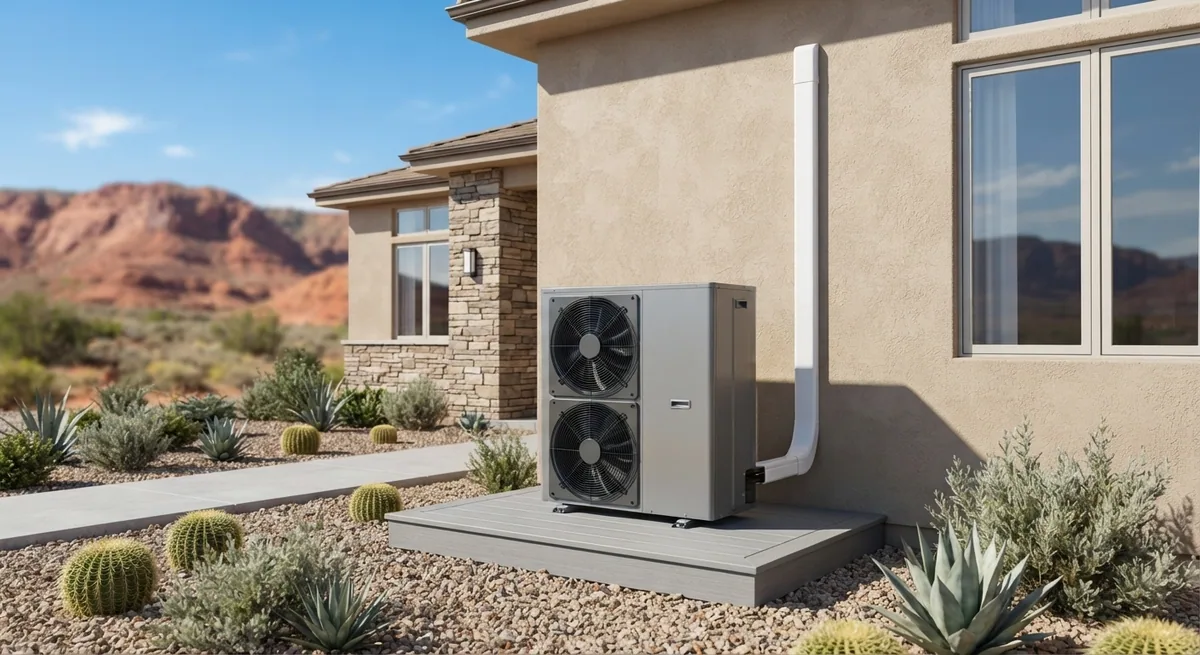
Quick Key Takeaways – Heat Pump Installation
Precision Heat Pump Installation in Saint George, Utah
Investing in a modern heat pump installation represents the single most thermodynamically sensible and energy-efficient climate control decision a property owner can make in Saint George, Utah. Situated in the arid Mojave Desert basin, Washington County experiences dramatic seasonal and daily temperature extremes—ranging from blazing summer afternoons surpassing 110 degrees Fahrenheit to crisp desert winter nights dipping into the 20s and low 30s Fahrenheit. Because an air-source heat pump functions as both a high-efficiency central air conditioner in the summer and a clean, highly efficient heating system in the winter, it eliminates the need for separate cooling and heating appliances, streamlining your home's mechanical footprint.
As part of our comprehensive residential and commercial HVAC services, our field dispatch network coordinates precision heat pump installations and system modernizations across Saint George, Washington, Santa Clara, Ivins, and Hurricane. We connect homeowners with background-vetted, professional HVAC installation specialists who engineer every project from the ground up, utilizing computerized Manual J thermal calculations, precision electrical sizing, and Department of Energy Southwest regional SEER2 and HSPF2 efficiency standards.
Whether you are building a custom home in Little Valley, converting an aging gas furnace and central AC split system to an all-electric platform, or retrofitting a property in SunRiver to capitalize on solar energy, our network delivers disciplined trade execution and transparent written estimates. To evaluate lifecycle costs, equipment tiers, and regional utility incentives, explore our detailed heat pump cost guide, or review ongoing diagnostic support on our heat pump repair page.
Why Heat Pumps Are the Ideal Thermodynamic Match for Southern Utah
In regions with sub-zero Arctic winters (such as the northern Midwest), standard heat pumps struggle because cold outdoor air contains limited thermal energy, forcing systems to rely heavily on inefficient electric resistance heat strips. In Saint George, however, winter conditions are remarkably favorable:
1. High Coefficient of Performance (COP) in Moderate Winters
Because Saint George winter daytime temperatures typically hover between 50 and 60 degrees Fahrenheit and nighttime lows rarely drop below 25 degrees, an air-source heat pump operates within its optimal thermodynamic window. Rather than burning natural gas or using electrical resistance coils to create heat, a heat pump extracts latent heat from ambient outdoor air and compresses it into high-temperature vapor that is circulated into your home. Under these conditions, modern heat pumps achieve a Coefficient of Performance (COP) between 3.0 and 4.2—delivering three to four units of usable heat energy for every single unit of electrical energy consumed.
2. Eliminating Natural Gas Standby Charges and Carbon Risks
For all-electric subdivisions across Washington County, heat pumps provide comfortable, whole-home warmth without the need for expensive propane tanks, natural gas line extensions, or monthly gas utility meter fees. Furthermore, because heat pumps do not utilize combustion to generate warmth, they completely eliminate the risk of carbon monoxide leaks, cracked furnace heat exchangers, or gas line safety concerns.
3. Pairing Flawlessly with Solar Photovoltaic (PV) Arrays
Saint George enjoys over 300 days of bright desert sunshine each year, making Washington County one of the premier solar energy markets in the Western United States. Pairing a high-efficiency variable-speed inverter heat pump with a residential rooftop solar array allows homeowners to heat and cool their homes using self-generated clean solar electricity, drastically reducing or virtually eliminating monthly utility bills from Dixie Power or the City of Saint George Energy Services.
Modern Inverter Heat Pumps: Moving Beyond Legacy Systems
If your impression of heat pumps is based on older equipment from the 1990s or 2000s, modern inverter technology represents a quantum leap in comfort, efficiency, and quiet operation:
LEGACY SINGLE-STAGE HEAT PUMP (Loud, Fixed Speed, Loses Capacity Below 40°F, Drafty Vents)
         ↓ TECHNOLOGICAL LEAP ↓
MODERN VARIABLE-SPEED INVERTER (Modulates 25-100%, Maintains Full Heat at 15°F, Whisper-Quiet)
- Variable-Speed Inverter Modulation: Older heat pumps operated at a single fixed speed—slamming on at 100 percent capacity and blowing air that felt lukewarm (around 85 degrees Fahrenheit) on cold days. Modern variable-speed inverter compressors modulate their rotational speed continuously in 1 percent increments between 25% and 100%, delivering consistent 95 to 105-degree supply air while matching your home's real-time heating or cooling load.
- Cold-Climate Heating Down to Freezing: Advanced inverter heat pumps utilize enhanced vapor injection and variable-speed electronic expansion valves (EEV) to maintain their full rated heating output down to 15 degrees Fahrenheit, easily handling the coldest winter night ever recorded in Saint George without engaging expensive auxiliary electric heat strips.
- Whisper-Quiet Sound Ratings: Traditional outdoor heat pumps sound like loud lawnmowers, generating 72 to 78 decibels of noise right outside patio windows. High-efficiency inverter heat pumps feature swept-wing fan blades, insulated compressor blankets, and brushless DC motors that operate at an astonishingly quiet 54 to 62 decibels—quieter than a standard indoor conversation.
Heat Pump Efficiency Tiers: Sizing the Right System
Heat pump efficiency is measured by two primary metrics: SEER2 (cooling efficiency in summer) and HSPF2 (Heating Seasonal Performance Factor 2 in winter). The table below outlines the three primary heat pump tiers installed across Washington County:
| Equipment Performance Tier | SEER2 Cooling Rating | HSPF2 Heating Rating | Compressor Technology | Temperature Consistency | Electric Utility Bill Impact |
|---|---|---|---|---|---|
| Standard Baseline Tier | 14.3 to 15.2 SEER2 | 7.5 to 8.0 HSPF2 | Single-Stage Rotary / Scroll | ± 3°F temperature swings | Standard electrical consumption; baseline code compliant |
| Enhanced Comfort Tier | 16.0 to 18.0 SEER2 | 8.2 to 8.8 HSPF2 | Two-Stage Scroll Compressor | ± 1.5°F comfortable warmth | 20% to 30% reduction in annual heating and cooling power |
| Premium Inverter Tier | 18.5 to 22.0+ SEER2 | 9.0 to 10.5+ HSPF2 | Variable-Speed Inverter Drive | ± 0.5°F precision comfort | 40% to 55% substantial electrical savings on Dixie Power bills |
5-Step Precision Heat Pump Installation Protocol
Installing an advanced variable-speed heat pump requires specialized engineering calculations, precision copper brazing, and meticulous commissioning. Technicians dispatched through our network follow an exhaustive 5-step protocol:
MANUAL J LOAD CALCULATION → ELECTRICAL INFRASTRUCTURE AUDIT → NITROGEN BRAZING → SUB-500 MICRON VACUUM → COMMISSIONING
Step 1: ACCA Manual J Load Calculation and Sizing
The installation specialist conducts an on-site evaluation of your home's square footage, window solar orientation, ceiling heights, and insulation values to calculate exact heating and cooling loads. Because heat pumps operate in both seasons, equipment is sized to handle peak 105°F summer heat while verifying heating capacity balance points.
Step 2: Electrical Infrastructure and Disconnect Verification
Heat pumps utilize electrical power for both the outdoor compressor and the indoor air handler's auxiliary backup heat strips. Technicians verify that your electrical service panel, wire gauges, circuit breakers, and outdoor disconnects meet National Electrical Code (NEC) standards and local Utah building requirements.
Step 3: Platform Leveling and Nitrogen-Purged Brazing
The outdoor unit is installed on a heavy-duty composite equipment pad equipped with anti-vibration riser feet, lifting the unit above potential desert flash-flood runoff and allowing clear drainage during winter defrost cycles. Technicians braze all copper lineset connections with 15% silver alloy while continuously flowing dry nitrogen gas to prevent internal oxidation scale from clogging delicate electronic expansion valves.
Step 4: Deep Vacuum Dehydration to Sub-500 Microns
Moisture contamination ruins synthetic POE compressor lubricants. Using a two-stage commercial vacuum pump and calibrated digital micron gauges, the closed refrigeration loop is pulled down below 500 microns, holding steady under a 15-minute standing decay test to verify that the refrigeration circuit is completely dehydrated and hermetically sealed.
Step 5: System Charging, Defrost Simulation, and Commissioning
The technician releases the factory refrigerant charge, fine-tuning volume by measuring real-time subcooling in cooling mode and superheat in heating mode. The outdoor defrost board is tested through a forced simulation cycle, auxiliary heat strip staging is verified with an electrical clamp meter, and temperature splits are balanced across all supply registers before client sign-off.
Maximizing Federal Tax Credits and Local Utility Rebates
Installing a high-efficiency heat pump unlocks exceptional financial incentives that substantially offset initial equipment acquisition costs:
- Federal Energy Efficient Home Improvement Credit (Section 25C): Under federal clean energy legislation, homeowners who install qualifying high-efficiency air-source heat pumps meeting CEE Tier standards can claim a federal tax credit of 30 percent of the total project cost, capped at $2,000 annually.
- Dixie Power Equipment Rebates: Dixie Electric Cooperative offers generous direct equipment rebates for customers who replace aging, inefficient cooling systems with qualifying high-efficiency heat pumps.
- City of Saint George Energy Services Incentives: Municipal electric customers qualify for conservation rebates when upgrading to certified high-SEER2 and high-HSPF2 heat pump platforms.
- Total Combined Savings: Combining federal tax credits, utility rebates, and a 40 to 50 percent reduction in seasonal electricity consumption delivers rapid financial payback and superior return on investment.
Technicians provide full itemized documentation and AHRI certification numbers required to submit seamless rebate and tax credit filings. For complete cost breakdowns, explore our heat pump cost guide.
Serving All Washington County Communities
Our heat pump installation teams provide prompt, dedicated service across all local municipalities:
- Saint George, UT (84770, 84790): Bloomington, Little Valley, SunRiver, The Ledges, and Stone Cliff. Review our Saint George location page.
- Washington, UT (84780): Washington Fields, Coral Canyon, and Green Springs. Visit our Washington UT dispatch page.
- Santa Clara, UT (84765): Historic Santa Clara and elevated hillside subdivisions. Explore our Santa Clara UT page.
- Ivins, UT (84738): Snow Canyon corridor and Kayenta. Read our Ivins UT overview.
- Hurricane, UT (84737): Central Hurricane and Sky Mountain. Visit our Hurricane UT page.
Frequently Asked Questions About Heat Pump Installation
Can a heat pump effectively heat my home when temperatures drop below freezing in Saint George?
Yes. Modern variable-speed inverter heat pumps are engineered to deliver reliable, robust heating down to 15 degrees Fahrenheit and below. Because Saint George winter nighttime temperatures rarely drop below 25 degrees, a properly sized modern heat pump will easily heat your entire home without relying heavily on expensive auxiliary electric resistance heat strips.
How long does a heat pump installation take?
A standard residential heat pump changeout (replacing an existing outdoor condensing unit and indoor air handler) is typically completed in 6 to 9 hours within a single day. Custom installations requiring new high-voltage sub-panels, extended copper linesets, or attic ductwork modifications may take up to two days.
What maintenance is required for a new heat pump?
Because a heat pump operates year-round for both cooling and heating, it should receive bi-annual preventative maintenance: a spring tune-up focused on outdoor coil cleaning, capacitor testing, and cooling subcooling verification, and a fall tune-up focused on defrost control simulation, reversing valve inspection, and auxiliary heat strip testing. Review our heat pump maintenance service page for program details.
Request a Clear Written Heat Pump Installation Estimate
Upgrade your home with a modern, high-efficiency inverter heat pump engineered to master Saint George's desert climate in every season. Connect directly with our local field dispatch desk to schedule an on-site consultation and Manual J thermal assessment.
Call our Saint George dispatch line today at (435) 348-8603, or submit your project details online through our contact page.
Dispatch Field Hotline
Connect directly with our local response coordinator to route a technician to your property.
(435) 348-8603Related Trade Services
Pricing Transparency
Review current regional parts and labor benchmarks across our comprehensive local pricing directory.
Explore HVAC Cost Guides →Our 4-Step HVAC Service Methodology
Engineered to guarantee rapid local response, empirical diagnostic accuracy, upfront pricing clarity, and code compliance.
Discovery and Dispatch
Direct telephone intake with our Saint George dispatch desk to record symptoms, assess thermal urgency, and route the nearest field unit directly to your property.
Empirical Diagnostic
Comprehensive physical, thermal, and electrical diagnostic testing of your cooling or heating system to pinpoint the root mechanical failure without guesswork.
Clear Project Estimate
We clearly explain our diagnostic findings and provide a transparent, itemized written estimate detailing scope and materials for your approval before starting work.
Precision Execution
Flawless repair or installation utilizing OEM parts, adherence to Utah mechanical codes, full thermodynamic testing, and thorough clean-up upon completion.
Speak Directly With Our Field Dispatch Desk
Connect immediately with our local Saint George response desk for prompt technician dispatch, empirical diagnostics, and clear project estimates.