Furnace Repair in Saint George, UT
Prompt on-site natural gas and electric furnace troubleshooting, carbon monoxide safety inspections, and precision repairs across Washington County.
Direct Field Dispatch
Connect directly with regional HVAC field technicians. Rapid emergency troubleshooting available.
(435) 348-8603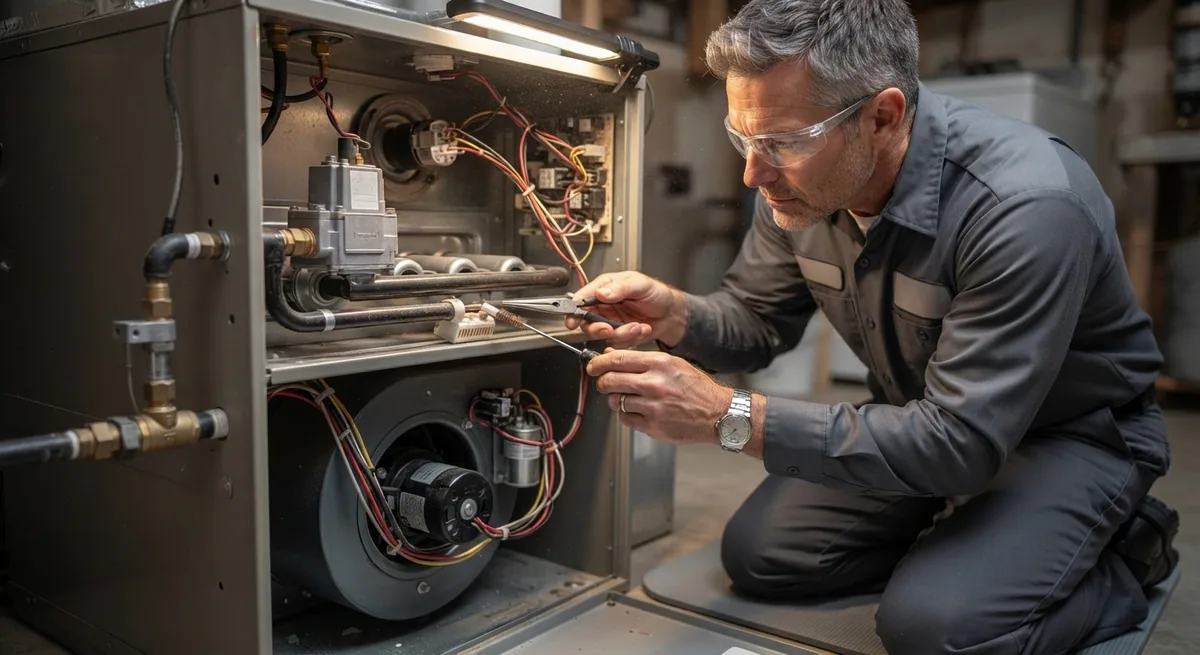
Quick Key Takeaways – Furnace Repair
Precision Furnace Repair in Saint George, Utah
When winter arrives in Southern Utah, nighttime temperatures drop rapidly into the 20s and low 30s Fahrenheit across the desert basin. For homeowners relying on natural gas or electric furnaces in Saint George, a sudden heating failure can quickly transform a comfortable living environment into an icy, unlivable space. Because gas furnaces sit idle in dusty attics, garages, and utility closets throughout the grueling six-month summer cooling season, accumulated red sand dust, insect intrusion, and electrical terminal oxidation frequently prevent burners from igniting on the first cold night of the year.
As part of our comprehensive residential and commercial HVAC services, our field dispatch network coordinates prompt, disciplined furnace repairs across Saint George, Washington, Santa Clara, Ivins, and Hurricane. Every service call is handled by background-vetted, professional HVAC technicians who possess advanced diagnostic training in combustion safety, electronic ignition sequences, and flue gas ventilation.
Whether your furnace is blowing cold air, clicking repeatedly without catching flame, making high-pitched squealing noises, or displaying an LED diagnostic error code, our network delivers empirical diagnostics, itemized written project estimates, and clean-tech property protection. To understand pricing dynamics, consult our furnace repair cost guide, or review broader climate control solutions on our heating repair overview.
The Anatomy of Furnace Failures in Southern Utah
A modern natural gas furnace is a sophisticated electromechanical appliance governed by an integrated sequence of operations and multiple interlocking safety switches. Understanding how these components fail in Saint George's desert environment helps property owners identify warning signs early:
1. Hot Surface Ignitor (HSI) Fracture and Burnout
Modern furnaces do not utilize old-fashioned standing pilot lights. Instead, they rely on an electronic Hot Surface Ignitor (HSI) manufactured from silicon carbide or silicon nitride. When the thermostat calls for heat, the control board energizes the ignitor, which glows red-hot, reaching temperatures between 1,800 and 2,500 degrees Fahrenheit within seconds. Over years of thermal shock, the brittle ceramic element becomes fragile and eventually develops hairline fractures, breaking the electrical circuit. When an ignitor fails, the furnace inducer motor runs, but no glow appears in the burner window, leaving the gas valve disabled.
2. Flame Rectification Sensor Oxidation and Nuisance Lockouts
The flame sensor is a thin stainless steel rod positioned directly in the path of the first burner flame. Using the physical principle of flame rectification, a tiny micro-amp DC current passes from the sensor through the ionized gas flame to electrical ground, proving to the control board that flame is safely present. In Saint George, fine red sand dust and moisture bake onto the sensor rod during summer dormancy, creating an invisible insulating film. When the furnace fires, the sensor cannot detect the micro-amp current, and the control board shuts off gas flow within four seconds to prevent unburned gas accumulation.
3. Draft Inducer Blower Motor Failure and Pressure Switch Errors
Before a gas furnace opens its gas valve, the small draft inducer blower motor must start to draw combustion air into the burners and push exhaust gases out through the flue chimney. Connected to the inducer housing is a sensitive diaphragm air pressure switch that verifies negative draft pressure. In Washington County, desert dust frequently infiltrates the sleeve bearings of the inducer motor, causing it to seize, overheat, or emit a loud, high-pitched screech. If the inducer fails or the small silicone pressure tubing becomes clogged with spider webs or moisture, the pressure switch remains open, and the furnace will not attempt ignition.
4. Cracked Heat Exchanger Cells: The Invisible Carbon Monoxide Hazard
The heat exchanger is the metal chamber where combustion occurs, keeping toxic exhaust fumes separate from your indoor breathing air. In Southern Utah, furnaces endure aggressive thermal cycling, rapidly heating from 30-degree garage temperatures to 500-degree operating temperatures. Over 12 to 18 years, the metal fatigues and develops cracks along curved cells or crimped seams. A cracked heat exchanger allows deadly, odorless carbon monoxide gas to mix directly into supply air ducts. Professional technicians use high-resolution borescope cameras to inspect every chamber for metal fatigue during service calls.
Common Furnace Symptoms: When to Call for Field Dispatch
Do not ignore intermittent furnace issues. Contacting a professional technician at the first sign of abnormal operation prevents small electrical faults from damaging expensive control boards or compromising family safety:
- Furnace Ignites for 3 to 5 Seconds, Then Abruptly Shuts Off: This is the classic symptom of an oxidized flame sensor or an ungrounded electrical circuit. The furnace will attempt this cycle three times before locking out for an hour.
- Draft Inducer Squeals Loudly When Heat Is Requested: A loud screaming, grinding, or rattling sound when the heating cycle begins signals bearing failure inside the draft inducer blower assembly.
- Blower Runs Constantly, But Air Coming Out of Vents Is Cold: This indicates that the furnace's primary high-temperature limit switch has tripped due to an overheated heat exchanger (often caused by a severely clogged air filter or blocked return grilles).
- Control Board LED Flashes a Specific Blink Code: Modern furnaces feature a sight glass on the blower door that displays flashing red or yellow LED light patterns (e.g., 3 flashes for a pressure switch error, 4 flashes for high limit open).
- Persistent Yellow or Flickering Burner Flames: Healthy natural gas burner flames burn with a steady, crisp blue color. A lazy, wavering, or yellow/orange flame indicates incomplete combustion, dirty burner orifices, or a compromised heat exchanger.
5-Step Empirical Furnace Diagnostic and Repair Workflow
Technicians dispatched through our Saint George network follow an exhaustive 5-step diagnostic process to ensure mechanical precision and absolute combustion safety:
SAFETY and ELECTRICAL AUDIT → COMBUSTION VENTILATION TESTING → BORESCOPE CAMERA INSPECTION → WRITTEN ESTIMATE → OEM REPAIR
Step 1: Electrical and Safety Control Verification
The technician tests incoming 120V line voltage, inspects the 24V control transformer, checks low-voltage control fuses, and evaluates the safety door interlock switch. Digital multimeter testing isolates whether the issue is control-related or component-specific.
Step 2: Draft Inducer and Pressure Switch Manometer Testing
Using a digital differential manometer, the technician measures the exact negative draft pressure produced by the inducer motor (measured in inches of water column, WC), comparing it directly to the rating printed on the factory pressure switch to confirm adequate draft.
Step 3: Ignition Circuit and Gas Valve Diagnostics
The technician measures electrical resistance (ohms) on the hot surface ignitor, tests the gas valve solenoid coils, and measures incoming gas supply pressure and manifold outlet pressure using a calibrated gas manometer to ensure proper gas flow.
Step 4: High-Resolution Borescope Heat Exchanger Inspection
Using a flexible fiber-optic camera with 360-degree articulation, the technician inspects internal heat exchanger cells, flame crossover ports, and crimped seams for cracks, rust perforations, or heat stress that could leak carbon monoxide.
Step 5: Itemized Written Estimate and Precision Repair
The technician explains the exact root cause of failure and provides an itemized written estimate detailing all necessary parts and labor before any physical repair begins. Following your written authorization, the technician installs OEM-grade components, cleans burner ports, and tests the furnace through a complete heating cycle, measuring flue gas carbon monoxide levels with a digital combustion analyzer.
Furnace Diagnostic Comparison Matrix
The table below outlines common furnace repair scenarios encountered across Saint George and Washington County:
| Failure Symptom | Failing Component | Root Cause in Desert Climate | Diagnostic Tool Used | Professional Repair Procedure |
|---|---|---|---|---|
| Ignitor Does Not Glow; No Flame | Hot Surface Ignitor (HSI) | Silicon carbide element fractured from thermal fatigue | Multimeter Resistance (Ohms) | Install heavy-duty silicon nitride universal ignitor element |
| Flame Lights 4 Seconds, Shuts Down | Flame Rectification Sensor | Silica dust and carbon oxidation on stainless rod | Micro-amp DC Meter Reading | Polish sensor rod with emery cloth; verify control board grounding |
| Loud Screeching Noise Upon Start | Draft Inducer Blower Motor | Red sand dust infiltration seizing sleeve bearings | Amp Clamp and Vibration Check | Replace draft inducer blower motor assembly and high-temp gasket |
| Blower Runs, No Flame; Limit Open | High-Limit Safety Switch | Clogged air filter choking airflow; overheating exchanger | Digital Thermometer / Continuity | Replace clogged air filter, test limit switch continuity, verify CFM |
| Furnace Clicks, No Gas Flow | Electronic Gas Valve Solenoid | Burned-out internal magnetic coil or stuck valve seat | Multimeter Voltage / Manometer | Replace gas valve assembly, set manifold pressure to factory specs |
| 3 Blinking Lights; No Ignition | Air Pressure Differential Switch | Obstruction in flue pipe, cracked silicone vacuum hose | Differential Digital Manometer | Clear flue pipe or vacuum tubing; replace defective pressure switch |
Heat Exchanger Integrity and Life-Safety Protection
The most critical component in any gas furnace is the heat exchanger. Because natural gas combustion produces toxic byproducts—including lethal, invisible, and odorless carbon monoxide—a crack in the heat exchanger represents an immediate health emergency.
In Saint George, furnaces in unconditioned attics and garages endure dramatic thermal expansion:
- In winter, ambient garage air drops into the 20s Fahrenheit. Within 60 seconds of ignition, burner flames heat the internal cells to over 500 degrees Fahrenheit.
- Over 12 to 18 years, the metal weakens along bends and seams.
- If a crack develops, the indoor circulation blower forces air into the burner chamber, distorting burner flames and pushing carbon monoxide directly into supply air ducts.
If our technicians detect a cracked heat exchanger during a borescope camera inspection, industry safety standards and local mechanical codes require the gas supply to be locked out to protect occupants. The technician will present clear, objective options for heat exchanger replacement or complete system replacement, referencing data in our furnace installation overview and our furnace replacement cost guide.
Serving All Washington County Communities
Our furnace repair teams provide prompt, dedicated service across all local municipalities:
- Saint George, UT (84770, 84790): Bloomington, Little Valley, SunRiver, The Ledges, and Stone Cliff. Review our Saint George location page.
- Washington, UT (84780): Washington Fields, Coral Canyon, and Green Springs. Visit our Washington UT dispatch page.
- Santa Clara, UT (84765): Historic Santa Clara and elevated hillside subdivisions. Explore our Santa Clara UT page.
- Ivins, UT (84738): Snow Canyon corridor and Kayenta. Read our Ivins UT overview.
- Hurricane, UT (84737): Central Hurricane and Sky Mountain. Visit our Hurricane UT page.
Frequently Asked Questions About Furnace Repair
How do I know if my furnace needs repair or complete replacement?
If your furnace is under 12 years old, the heat exchanger is structurally sound, and the estimated repair cost is under $800, repairing the unit is typically the most economical choice. However, if your furnace is over 15 years old, suffers from chronic ignition failures, or has a cracked heat exchanger, investing in a modern high-AFUE furnace provides superior reliability, lower heating bills, and a 10-year manufacturer warranty.
Why is my furnace blowing cold air instead of warm air?
When a furnace blows cold air, it usually means the indoor circulation blower is running while the burners have shut off. This occurs when an electronic safety switch (such as a high-limit switch, flame rollout switch, or pressure switch) detects an unsafe operating condition—such as overheating caused by a severely clogged air filter—and kills gas flow to prevent fire.
How often should my furnace be professionally inspected?
Gas furnaces should be professionally inspected and tested at least once a year, ideally in October or early November before the winter heating season begins. An annual safety tune-up includes cleaning the flame sensor, testing safety limit switches, conducting a borescope heat exchanger inspection, and verifying combustion carbon monoxide levels.
Schedule Professional Furnace Repair in Saint George Today
Do not risk freezing nights or carbon monoxide hazards with a malfunctioning gas furnace. Connect directly with our Saint George field dispatch desk to schedule an empirical on-site diagnostic assessment with an experienced, background-vetted technician.
Call us now at (435) 348-8603 for immediate phone intake, or submit your service request online through our contact page.
Dispatch Field Hotline
Connect directly with our local response coordinator to route a technician to your property.
(435) 348-8603Related Trade Services
Pricing Transparency
Review current regional parts and labor benchmarks across our comprehensive local pricing directory.
Explore HVAC Cost Guides →Our 4-Step HVAC Service Methodology
Engineered to guarantee rapid local response, empirical diagnostic accuracy, upfront pricing clarity, and code compliance.
Discovery and Dispatch
Direct telephone intake with our Saint George dispatch desk to record symptoms, assess thermal urgency, and route the nearest field unit directly to your property.
Empirical Diagnostic
Comprehensive physical, thermal, and electrical diagnostic testing of your cooling or heating system to pinpoint the root mechanical failure without guesswork.
Clear Project Estimate
We clearly explain our diagnostic findings and provide a transparent, itemized written estimate detailing scope and materials for your approval before starting work.
Precision Execution
Flawless repair or installation utilizing OEM parts, adherence to Utah mechanical codes, full thermodynamic testing, and thorough clean-up upon completion.
Speak Directly With Our Field Dispatch Desk
Connect immediately with our local Saint George response desk for prompt technician dispatch, empirical diagnostics, and clear project estimates.