Furnace Installation in Saint George, UT
Precision natural gas and electric furnace installations and system modernizations engineered for safe, dependable warmth across Washington County.
Direct Field Dispatch
Connect directly with regional HVAC field technicians. Rapid emergency troubleshooting available.
(435) 348-8603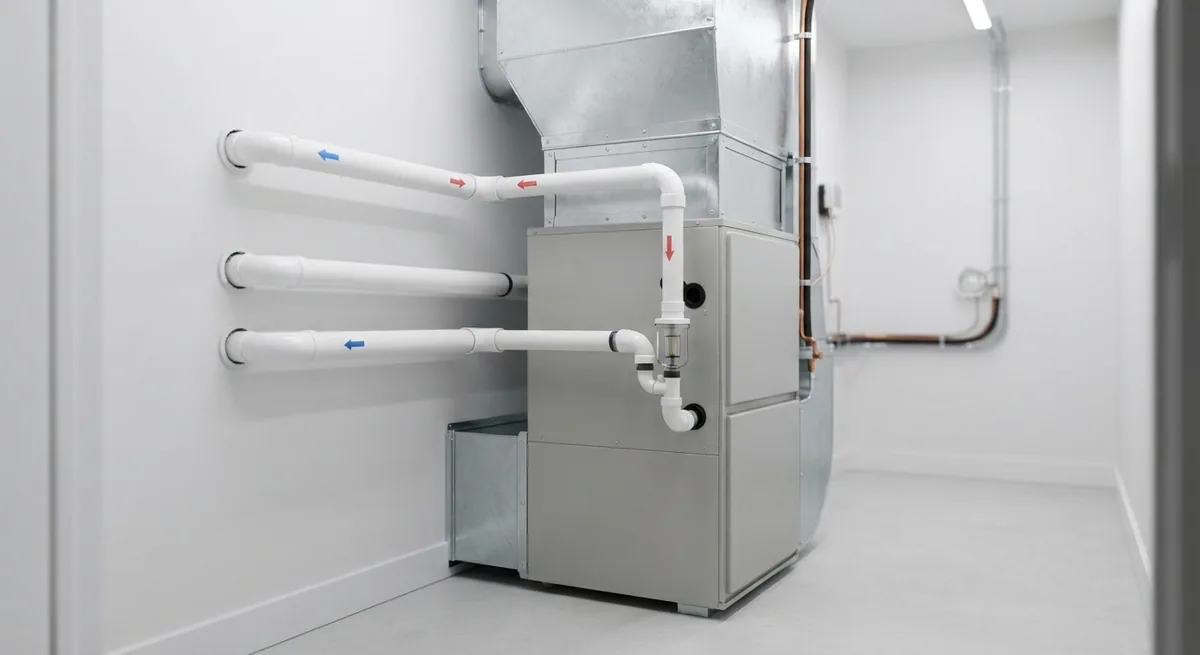
Quick Key Takeaways – Furnace Installation
Precision Furnace Installation in Saint George, Utah
Installing a new natural gas or electric furnace in Saint George, Utah, requires a balanced understanding of Southern Utah's high desert winter climate, regional fuel options, and strict municipal building codes. While summer cooling demands dominate the local utility landscape, winter nights in Washington County consistently plunge into the 20s and low 30s Fahrenheit. An aging, inefficient, or improperly sized furnace not only drives up winter heating bills from Dominion Energy, but can also present severe life-safety hazards, including combustion gas backdrafting and toxic carbon monoxide leaks into living spaces.
As part of our comprehensive residential and commercial HVAC services, our field dispatch network coordinates precision furnace installations and equipment modernizations throughout Saint George, Washington, Santa Clara, Ivins, and Hurricane. We connect homeowners with background-vetted, professional HVAC installation specialists who conduct computerized Manual J heating load calculations, evaluate gas supply lines and electrical infrastructure, and ensure precision flue venting compliance.
Whether you are replacing an aging 20-year-old furnace that has developed heat exchanger stress cracks or upgrading an inefficient single-stage unit to a modern variable-speed modulating platform, our network delivers disciplined trade execution and transparent written estimates. To evaluate typical equipment and labor pricing, explore our comprehensive furnace replacement cost guide, or review emergency troubleshooting options on our furnace repair service page.
80% Versus 96% AFUE Gas Furnaces: Choosing the Right Efficiency Tier
The Annual Fuel Utilization Efficiency (AFUE) rating measures how efficiently a gas furnace converts natural gas into usable household heat over an entire winter season. In Saint George, property owners primarily choose between two distinct technological categories:
1. Standard-Efficiency 80% AFUE Gas Furnaces
An 80% AFUE furnace converts 80 cents of every dollar spent on natural gas directly into indoor heat. The remaining 20 percent of heat energy is expelled through a standard metal B-vent chimney flue to safely carry combustion byproducts outside:
- How It Vents: Relies on natural thermal buoyancy and an induced draft blower motor to vent hot exhaust gases up through an existing double-wall metal B-vent pipe routed through your attic and roof.
- Lower Upfront Equipment Cost: Because 80% furnaces do not require secondary condensing heat exchangers or specialized plastic venting, they represent a highly cost-effective replacement option.
- Best Suited For: Existing homes with functional vertical metal chimney flues and properties in Saint George where winter heating run-times are relatively modest compared to colder northern Utah regions.
2. High-Efficiency 90% to 96%+ AFUE Condensing Gas Furnaces
A 96% AFUE condensing furnace extracts virtually all heat from natural gas combustion. In addition to a primary aluminized steel heat exchanger, a condensing furnace features a secondary stainless steel heat exchanger that pulls latent heat from water vapor in the exhaust gases:
- How It Vents: Because the exhaust gases are cooled so thoroughly, they lose their natural thermal buoyancy and cannot be vented into a metal chimney. Instead, exhaust is pushed horizontally or vertically through direct-vent Schedule 40 PVC or polypropylene plastic pipe, requiring an external condensate drain line.
- Lowest Monthly Operating Cost: Delivers the highest possible efficiency and lowest monthly heating bills from Dominion Energy, converting 96 cents of every fuel dollar into heat.
- Best Suited For: Energy-conscious homeowners, extensive home remodels, large custom homes with high heating loads, and properties seeking peak winter efficiency.
Single-Stage, Two-Stage, and Modulating Burner Technologies
Beyond the AFUE rating, modern gas furnaces feature advanced burner and blower motor technologies that dictate how evenly and quietly warmth is distributed throughout your home:
SINGLE-STAGE (100% Full Blast or Off) → TWO-STAGE (65% Low or 100% High) → MODULATING (40% to 100% in 1% Steps)
Single-Stage Furnaces (Standard Tier)
A single-stage furnace has only one firing mode: 100 percent maximum capacity. When the thermostat calls for heat, the gas valve opens fully, the burners fire at maximum BTU output, and the blower runs at full speed until the temperature setting is satisfied. While reliable and economical upfront, single-stage units can create noticeable temperature swings and loud airflow noise.
Two-Stage Furnaces (Enhanced Comfort Tier)
A two-stage furnace features a dual-stage gas valve and an intelligent control board. On mild winter mornings (above 40 degrees Fahrenheit), the furnace fires on its low stage (approximately 65 percent of maximum capacity), running for longer, quieter cycles that distribute warmth evenly. When severe sub-freezing cold snaps hit Washington County, the furnace automatically shifts to high stage, delivering full heating capacity.
Modulating Furnaces with Variable-Speed ECM Blowers (Premium Tier)
A modulating furnace represents the pinnacle of residential heating engineering. Its electronic gas valve modulates continuously between 40% and 100% capacity in 1 percent increments, matching the home's real-time heat loss precisely. Paired with a variable-speed electronically commutated motor (ECM), a modulating furnace maintains indoor temperatures within 0.5 degrees Fahrenheit while consuming up to 70 percent less electrical power for air circulation than standard blower motors.
Gas Furnace Comparison Matrix: Saint George Performance
The table below outlines the core operational characteristics of the primary gas furnace configurations installed across Washington County:
| Furnace Technology Tier | AFUE Rating | Flue Venting Requirement | Blower Motor Technology | Temperature Consistency | Best Suited Property Application |
|---|---|---|---|---|---|
| Standard 80% Single-Stage | 80% AFUE | Standard Metal B-Vent Chute | Multi-Speed PSC or Constant Torque ECM | ± 3°F to 4°F temperature swings | Budget-conscious changeouts; homes with existing B-vent flues |
| Enhanced 80% Two-Stage | 80% AFUE | Standard Metal B-Vent Chute | Variable-Speed ECM Blower | ± 1.5°F comfortable warmth | Mid-range properties seeking quiet operation without new PVC venting |
| High-Efficiency 96% Two-Stage | 96% AFUE | Direct-Vent Schedule 40 PVC | Variable-Speed ECM Blower | ± 1.0°F consistent comfort | Remodels, energy-conscious homes, properties with accessible exterior walls |
| Ultra-High 98% Modulating | 98% AFUE | Direct-Vent Schedule 40 PVC | Fully Modulating ECM Blower | ± 0.5°F precision comfort | Luxury custom residences, properties demanding whisper-quiet air delivery |
5-Step Precision Furnace Installation Workflow
Installing a fuel-burning gas appliance requires strict mechanical discipline and rigorous testing to ensure family safety. Technicians dispatched through our network follow a structured 5-step installation protocol:
MANUAL J LOAD CALCULATION → REMOVAL and RETROFIT → GAS LINE SIZING → COMBUSTION VENTING → DIGITAL COMMISSIONING
Step 1: Pre-Installation Engineering and Site Prep
The installation specialist conducts an on-site ACCA Manual J heating load calculation to verify exact BTU requirements. The crew lays heavy protective canvas drop cloths across all indoor walking paths and wears protective shoe booties. Old equipment is disconnected, decommissioned, and hauled away for recycling.
Step 2: Mechanical Platform and Transition Fabrication
The new furnace cabinet is placed on vibration-dampening isolation pads inside the utility closet, garage, or attic. Custom galvanized sheet metal transition plenums are fabricated on site to connect the furnace seamlessly to your existing ductwork, sealed airtight with fiberglass mesh and non-toxic mastic paste to eliminate thermal air leaks.
Step 3: Gas Piping, Sediment Trap, and Pressure Testing
The technician inspects the incoming black iron gas line, verifying proper pipe sizing (measured in cubic feet per hour, CFH). A new code-compliant full-port gas shutoff valve, flexible stainless steel connector, and a vertical sediment trap (drip leg) are installed to catch pipe scale before it enters the gas valve. All connections are pressure-tested and verified with electronic combustible gas leak sniffers.
Step 4: Certified Flue Venting and Combustion Air Supply
For 80% AFUE furnaces, the metal B-vent flue is inspected for continuous upward slope (minimum 1/4 inch per foot), firestop clearance, and storm collar integrity. For 90%+ AFUE condensing furnaces, direct-vent Schedule 40 PVC pipes are installed through exterior walls or roof penetrations, including dedicated combustion air intake lines to ensure the furnace never draws contaminated indoor air.
Step 5: Combustion Analysis, Airflow Balancing, and Commissioning
The technician connects a digital combustion analyzer to measure flue gas temperatures, oxygen percentages, and carbon monoxide levels. Gas manifold pressure is calibrated to exact factory specifications using a digital manometer, temperature rise across the heat exchanger is verified, and safety limit switches are tested through a full operational cycle before client sign-off.
Why Paired Installation Matters: Furnace and Central AC
In the vast majority of Saint George homes, the gas furnace and the central air conditioner share the exact same indoor air handler cabinet, blower motor, and ductwork plenum:
- The Blower Drives Both Systems: The furnace blower motor moves warm air across your living spaces in the winter and pushes cold air across the evaporator coil in the summer.
- SEER2 Efficiency Depends on the Furnace: A brand-new high-efficiency 16 to 18 SEER2 air conditioner cannot achieve its rated efficiency if paired with an aging, single-speed furnace blower motor. A modern variable-speed ECM furnace blower is required to achieve full SEER2 ratings.
- Lower Combined Labor Costs: Replacing your furnace at the same time as your central air conditioner saves thousands of dollars in redundant sheet metal fabrication, electrical hookup, and permitting fees. Explore our air conditioning installation page to learn about complete matched split system upgrades.
Serving All Washington County Communities
Our furnace installation crews provide prompt, dedicated service across all local municipalities:
- Saint George, UT (84770, 84790): Bloomington, Little Valley, SunRiver, The Ledges, and Stone Cliff. Review our Saint George location page.
- Washington, UT (84780): Washington Fields, Coral Canyon, and Green Springs. Visit our Washington UT dispatch page.
- Santa Clara, UT (84765): Historic Santa Clara and elevated hillside subdivisions. Explore our Santa Clara UT page.
- Ivins, UT (84738): Snow Canyon corridor and Kayenta. Read our Ivins UT overview.
- Hurricane, UT (84737): Central Hurricane and Sky Mountain. Visit our Hurricane UT page.
Frequently Asked Questions About Furnace Installation
How long does a gas furnace installation take?
A standard residential furnace changeout is typically completed in 6 to 8 hours within a single day. If your project involves converting from an 80% to a 96% condensing furnace that requires new direct-vent PVC pipes through exterior walls, the installation may require 8 to 10 hours.
Can I install an 80% AFUE furnace in Saint George, or must it be 90%+?
Yes, 80% AFUE gas furnaces remain fully code-compliant in Utah for residential split-system replacements. In Southern Utah's climate, where winter heating seasons are relatively brief, an 80% AFUE two-stage furnace is often an exceptionally cost-effective option that utilizes existing metal chimney flues without requiring new PVC wall penetrations.
What warranties are included with a new furnace?
Leading HVAC equipment manufacturers (including Trane, Carrier, Lennox, Goodman, and Rheem) provide a standard 10-year limited parts warranty and a 20-year to lifetime limited warranty on the internal heat exchanger when the equipment is registered within 60 days of installation.
Request a Clear Written Furnace Installation Estimate
Upgrade your home with a safe, high-efficiency gas furnace engineered for dependable Southern Utah winter warmth. Connect directly with our Saint George field dispatch desk to schedule an on-site heating assessment and itemized written project estimate.
Call our local dispatch desk today at (435) 348-8603, or submit your project details online through our contact page.
Dispatch Field Hotline
Connect directly with our local response coordinator to route a technician to your property.
(435) 348-8603Related Trade Services
Pricing Transparency
Review current regional parts and labor benchmarks across our comprehensive local pricing directory.
Explore HVAC Cost Guides →Our 4-Step HVAC Service Methodology
Engineered to guarantee rapid local response, empirical diagnostic accuracy, upfront pricing clarity, and code compliance.
Discovery and Dispatch
Direct telephone intake with our Saint George dispatch desk to record symptoms, assess thermal urgency, and route the nearest field unit directly to your property.
Empirical Diagnostic
Comprehensive physical, thermal, and electrical diagnostic testing of your cooling or heating system to pinpoint the root mechanical failure without guesswork.
Clear Project Estimate
We clearly explain our diagnostic findings and provide a transparent, itemized written estimate detailing scope and materials for your approval before starting work.
Precision Execution
Flawless repair or installation utilizing OEM parts, adherence to Utah mechanical codes, full thermodynamic testing, and thorough clean-up upon completion.
Speak Directly With Our Field Dispatch Desk
Connect immediately with our local Saint George response desk for prompt technician dispatch, empirical diagnostics, and clear project estimates.