Heating Maintenance in Saint George, UT
Ensure complete combustion safety, prevent cold-weather breakdowns, and optimize winter heating efficiency with a precision multi-point heating tune-up.
Direct Field Dispatch
Connect directly with regional HVAC field technicians. Rapid emergency troubleshooting available.
(435) 348-8603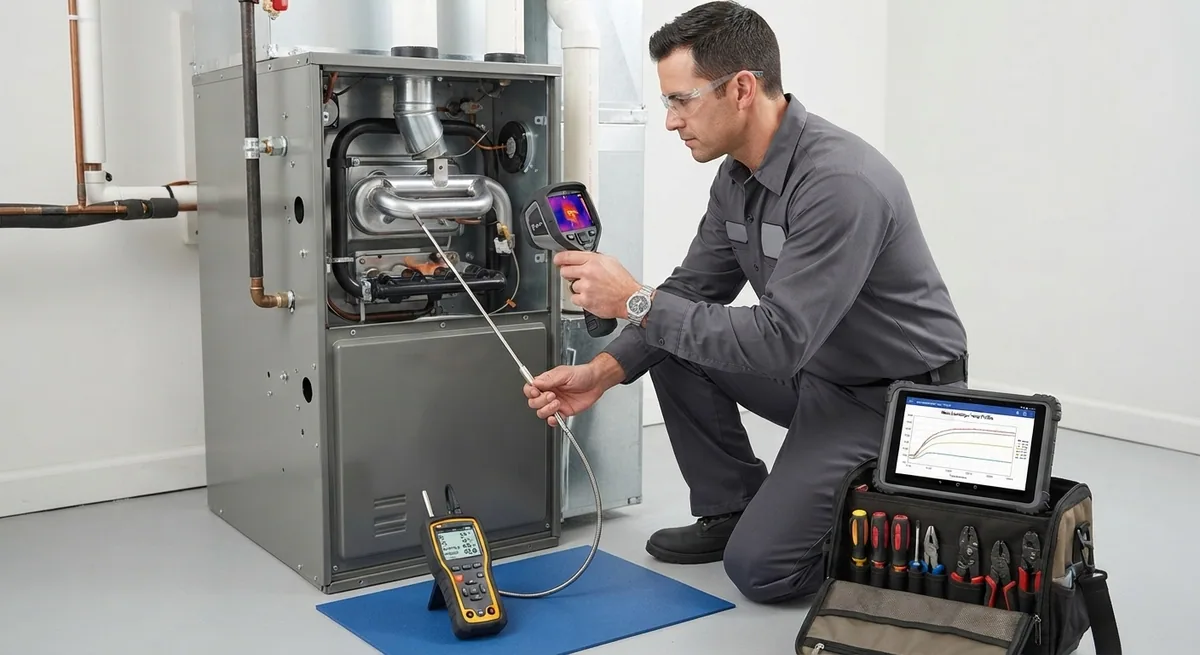
Quick Key Takeaways – Heating Maintenance
Comprehensive Heating Maintenance in Saint George, Utah
Because Southern Utah is renowned for its warm desert climate and long summer days, homeowners across Washington County frequently overlook their heating systems until the first freezing November cold snap arrives. In Saint George, where winter nighttime temperatures regularly plunge into the 20s and low 30s Fahrenheit, an unmaintained gas furnace or heat pump is a significant operational and life-safety liability. Heating systems that sit dormant for six to eight months accumulate airborne red sand dust, spider webs, and electrical oxidation that can cause sudden ignition failures, toxic carbon monoxide leaks, or electrical short-circuits on the coldest night of the year.
As part of our comprehensive residential and commercial HVAC services, our local dispatch network coordinates thorough, multi-point preventative heating tune-ups across Saint George, Washington, Santa Clara, Ivins, and Hurricane. Every tune-up is conducted by background-vetted, professional HVAC technicians who utilize empirical diagnostic testing equipment—including digital combustion analyzers, borescope inspection cameras, and gas manometers—to clean, calibrate, and verify every safety and operational component.
By investing in an annual fall heating tune-up, you protect your family against deadly carbon monoxide hazards, prevent emergency breakdown expenses, and ensure efficient, whisper-quiet operation all winter long. If your heating system requires active troubleshooting, visit our heating repair service page, or explore comprehensive pricing breakdowns in our HVAC maintenance cost guide.
Why Fall Heating Maintenance Is Vital in Southern Utah
Operating a heating system in Saint George presents unique mechanical challenges rooted in the long, hot desert summer:
1. Dormancy and Silt Infiltration on Burners and Ignitors
Throughout the grueling six-month summer cooling season, your heating components sit idle inside hot, unconditioned attics, garages, or mechanical closets. During this period, fine Dixie red sand dust and household lint settle heavily onto gas burner tubes, pilot orifices, and delicate electronic hot surface ignitors. When the heating cycle is initiated in late autumn, this accumulated dust creates uneven gas flow, resulting in delayed burner ignition (characterized by a loud popping or booming sound upon startup) or premature ignitor element burnout.
2. Silica and Carbon Oxidation on Flame Rectification Sensors
The flame sensor is a slender stainless steel rod that confirms the presence of fire in the combustion chamber. Over months of summer dormancy, fine silica dust and airborne humidity react with metal surfaces, forming an invisible, non-conductive oxidation layer on the sensor rod. When the furnace fires, the sensor fails to register the tiny micro-amp DC current passing through the flame to ground, triggering a safety lockout within four seconds. Cleaning and polishing the flame sensor to bare metal is a vital preventative step to ensure flawless winter ignition, as detailed in our furnace repair overview.
3. Thermal Cycling Fatigue and Heat Exchanger Cracking
In Southern Utah's desert climate, heating equipment experiences severe thermal shock. On a cold January night, a furnace situated in an unconditioned garage can be 25 degrees Fahrenheit. Within 60 seconds of burner ignition, the metal heat exchanger cells expand rapidly to over 500 degrees Fahrenheit. Over 12 to 18 years of continuous expansion and contraction, hairline stress cracks frequently develop along burner seams and radiator crimps. A cracked heat exchanger allows toxic combustion byproducts—specifically lethal, odorless carbon monoxide—to enter the indoor breathing air. A high-resolution borescope camera inspection during a tune-up is the only reliable way to detect these invisible fractures before they endanger your home.
4. Flue Gas Chimney Obstructions and Backdrafting Hazards
During the long summer months, small desert birds, bats, and mud dauber wasps frequently build nests inside exterior metal B-vent chimney caps on residential rooftops. If a flue chimney is obstructed when the heating season begins, toxic combustion exhaust cannot escape. The resulting backdraft will trip thermal rollout safety switches or spill dangerous carbon monoxide and nitrogen dioxide into your attic and living spaces.
The 20-Point Precision Heating Safety and Performance Tune-Up
When a professional technician executes a heating tune-up through our network, they perform an exhaustive 20-point empirical inspection covering combustion, electrical, airflow, and safety systems:
SAFETY and ELECTRICAL AUDIT → COMBUSTION CARBON MONOXIDE TEST → BORESCOPE HEAT EXCHANGER → BURNER CLEANING → AIRFLOW and STATS
Combustion Safety and Venting (Points 1–6)
- Flue Draft and B-Vent Inspection: Inspecting the exhaust flue chimney for upward pitch, corrosion, bird nests, and secure draft hood connections.
- Combustion Gas Carbon Monoxide Analysis: Using an electronic digital combustion analyzer to measure parts-per-million (PPM) CO levels in the flue exhaust.
- Draft Inducer Motor Amp Draw: Measuring inducer blower motor current and testing static pressure draft switches.
- Gas Pressure Calibration: Testing incoming gas line pressure and manifold outlet pressure using a digital manometer to ensure clean burning.
- Burner Tube and Orifice Cleaning: Vacuuming and brushing rust, lint, and red sand dust from main burner ports and crossover channels.
- Gas Leak Detection: Inspecting gas shut-off valves, sediment traps, and flexible connectors with an electronic combustible gas detector.
Heat Exchanger and Life-Safety Switches (Points 7–11)
- Borescope Camera Heat Exchanger Audit: Inspecting internal primary and secondary heat exchanger cells for microscopic cracks, rust, or metal fatigue.
- Flame Rectification Sensor Polishing: Cleaning the stainless steel flame sensor with fine emery cloth and measuring micro-amp signal strength.
- Hot Surface Ignitor Resistance Test: Measuring electrical resistance (ohms) on the ignitor element to detect impending element failure.
- High-Temperature Limit Switch Test: Testing primary and auxiliary limit switches to verify automatic shutdown if the unit overheats.
- Flame Rollout Safety Switch Verification: Inspecting manual-reset rollout switches positioned near burner compartments.
Electrical and Mechanical Components (Points 12–16)
- Blower Motor Current and Capacitor Testing: Measuring circulation blower motor running amperage and testing capacitor microfarads.
- Blower Wheel Inspection: Checking blower wheel blades for dust accumulation that reduces cubic feet per minute (CFM) airflow.
- Transformer and Control Fuse Audit: Testing 24V control circuit voltage and inspecting integrated control board terminals.
- Safety Door Interlock Switch Test: Verifying that the blower compartment access panel switch instantly kills 120V power when opened.
- Electrical Terminal Tightening: Inspecting and torquing high-voltage screw terminals and checking for wire insulation heat damage.
Airflow, Ductwork and Thermostat Calibration (Points 17–20)
- Temperature Rise Measurement: Measuring return air temperature versus supply air temperature, confirming it falls within the manufacturer's specified delta T range.
- Total External Static Pressure (TESP): Measuring duct static pressure with a digital differential manometer to detect airflow restrictions.
- Air Filter Replacement and Housing Audit: Inspecting the return air filter and checking cabinet door seals to prevent attic dust infiltration.
- Thermostat Calibration and Cycle Test: Testing thermostat anticipator settings, temperature sensor accuracy, and automated heating staging.
Heating Tune-Up Comparison: Safety and Value
The comparison table below illustrates the critical difference between a maintained heating system and a neglected system in Washington County:
| Operational Metric | Professionally Maintained Heater | Neglected Heating System | Real-World Homeowner Consequence |
|---|---|---|---|
| Combustion Safety Risk | Zero; verified carbon monoxide levels and intact heat exchanger | Elevated; risk of invisible heat exchanger cracks or flue backdrafting | Protects family and pets from odorless, lethal carbon monoxide poisoning |
| Winter Ignition Reliability | 99% reliable; clean flame sensor, vacuumed burner orifices | Frequent nuisance lockouts on cold mornings; furnace clicks 3 times then quits | Prevents emergency service calls when outdoor temperatures drop to 25°F |
| Monthly Fuel Efficiency | Clean burners and proper gas pressure deliver rated 80% to 96% AFUE | Sooted burners and uncalibrated gas pressure waste 10% to 15% of fuel | Saves money on monthly Dominion Energy gas or Dixie Power electric bills |
| Equipment Service Lifespan | 15 to 20 years of safe, dependable operational service | 10 to 12 years; premature heat exchanger burnout from dirty limit cycling | Delays major replacement expense; protects 10-year manufacturer warranty |
Supporting Home Comfort: Humidification and Airflow
In Southern Utah, winter heating operations can drastically reduce indoor humidity, creating uncomfortable living conditions:
- Combating Winter Dryness: Cold winter desert air has very low moisture content. When that air is heated to 72 degrees inside your home, relative humidity can drop below 15 percent, irritating respiratory tracts and drying out wood furnishings. Technicians can inspect or integrate whole-home bypass humidifiers during your tune-up.
- Ductwork Thermal Integrity: Because attic spaces in Saint George drop below freezing on winter nights, any uninsulated or leaking flex duct loses massive amounts of heat before reaching your living rooms. Explore our professional sealing procedures on our ductwork repair service page.
- Seasonal Dual-System Care: If your home utilizes a modern heat pump rather than a gas furnace, learn about reversible refrigeration tune-ups on our heat pump maintenance page.
Serving All Washington County Communities
Our heating maintenance teams provide dedicated scheduling across all local municipalities:
- Saint George, UT (84770, 84790): Bloomington, Little Valley, SunRiver, The Ledges, and Stone Cliff. Review our Saint George location page.
- Washington, UT (84780): Washington Fields, Coral Canyon, and Green Springs. Visit our Washington UT dispatch page.
- Santa Clara, UT (84765): Historic Santa Clara and elevated hillside subdivisions. Explore our Santa Clara UT page.
- Ivins, UT (84738): Snow Canyon corridor and Kayenta. Read our Ivins UT overview.
- Hurricane, UT (84737): Central Hurricane and Sky Mountain. Visit our Hurricane UT page.
Frequently Asked Questions About Heating Maintenance
When is the best time to schedule heating maintenance in Saint George?
The ideal time to schedule heating maintenance in Southern Utah is during the autumn months of October and early November, before freezing night temperatures arrive. Scheduling early ensures that any worn components, dirty flame sensors, or venting issues are resolved before you depend on your system for daily warmth.
Can a furnace really produce carbon monoxide without making noise?
Yes. Carbon monoxide is a completely odorless, colorless, and tasteless gas produced by the incomplete combustion of natural gas. A furnace with a cracked heat exchanger can run normally and quietly while pumping dangerous levels of carbon monoxide directly into your home's air supply. Professional combustion testing and borescope inspections are essential to verify that the heat exchanger is structurally sound.
How often should my furnace filter be replaced during the winter?
In Saint George, standard 1-inch furnace filters should be inspected every 30 days and replaced at least every 60 to 90 days during the heating season. If your home has pets or someone with respiratory sensitivities, or if you live near active construction in Washington County, replacing filters more frequently prevents airflow restriction that causes the furnace to overheat and shut down.
Schedule Your Precision Heating Tune-Up Today
Do not wait for a freezing winter night to discover your furnace or heat pump has an ignition fault or a cracked heat exchanger. Connect directly with our Saint George field dispatch desk to schedule a comprehensive, clean-tech multi-point heating safety tune-up.
Call us today at (435) 348-8603, or submit your appointment request online through our contact page.
Dispatch Field Hotline
Connect directly with our local response coordinator to route a technician to your property.
(435) 348-8603Related Trade Services
Pricing Transparency
Review current regional parts and labor benchmarks across our comprehensive local pricing directory.
Explore HVAC Cost Guides →Our 4-Step HVAC Service Methodology
Engineered to guarantee rapid local response, empirical diagnostic accuracy, upfront pricing clarity, and code compliance.
Discovery and Dispatch
Direct telephone intake with our Saint George dispatch desk to record symptoms, assess thermal urgency, and route the nearest field unit directly to your property.
Empirical Diagnostic
Comprehensive physical, thermal, and electrical diagnostic testing of your cooling or heating system to pinpoint the root mechanical failure without guesswork.
Clear Project Estimate
We clearly explain our diagnostic findings and provide a transparent, itemized written estimate detailing scope and materials for your approval before starting work.
Precision Execution
Flawless repair or installation utilizing OEM parts, adherence to Utah mechanical codes, full thermodynamic testing, and thorough clean-up upon completion.
Speak Directly With Our Field Dispatch Desk
Connect immediately with our local Saint George response desk for prompt technician dispatch, empirical diagnostics, and clear project estimates.